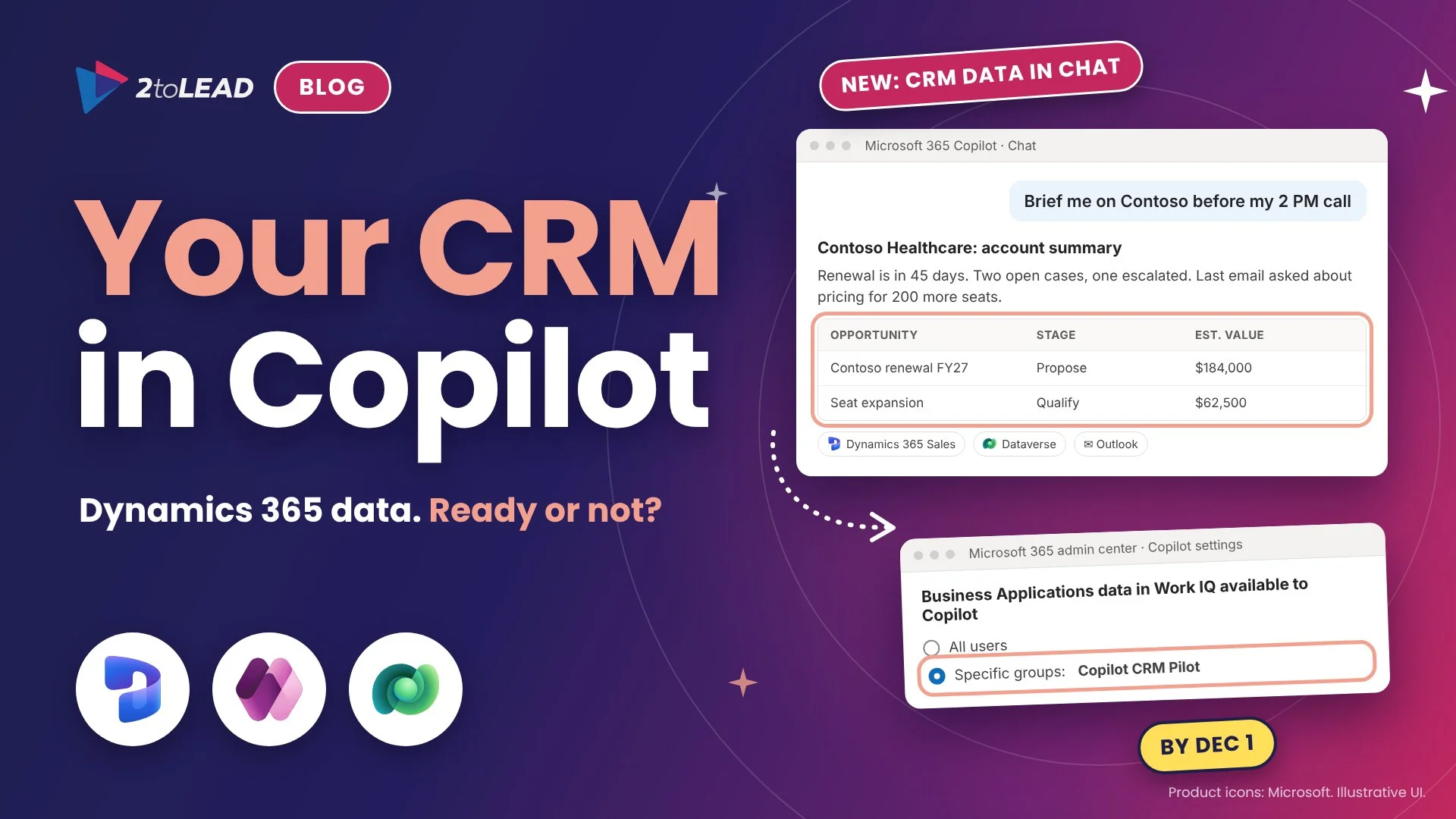
The Microsoft Copilot harness is the new name for the GitHub Copilot harness in Copilot Studio. See what changes, what doesn't and 6 moves before Dec 1.
TL;DR: The GitHub Copilot harness in Copilot Studio now has a Microsoft-wide name: the Microsoft Copilot harness. It is the same engine behind Copilot Code and the GitHub Copilot app, and it is now in Microsoft Foundry. The name changes, Copilot Credits billing doesn't, and six governance moves belong before December 1.
The engine under your most capable Copilot Studio agents just got a new name, and two billing changes around it land on December 1. On October 28, 2026, Microsoft introduced the Microsoft Copilot harness, the GitHub-built harness that already powers Copilot Studio, Copilot Code, the GitHub Copilot app, the Copilot CLI and Visual Studio Code, and opened it to developers in Microsoft Foundry.
The Microsoft Copilot harness is the orchestration layer around an AI model: it gives an agent its instructions, context, tools, sandbox and controls, and decides what happens next. In Copilot Studio it is the harness that Microsoft Learn still calls the GitHub Copilot harness, built for reasoning-heavy, multi-step work and billed on Copilot Credits.
Our view that Copilot Studio harness choice is a design decision, not a toggle still holds. What changes is the scope: the harness is now Microsoft's standard engine for agentic work, and it deserves one governance model.
The GitHub Copilot harness in Copilot Studio is now part of one Microsoft-wide harness with a new name, the Microsoft Copilot harness. Microsoft says the GitHub engineering team built it, Microsoft adopted it company-wide, and it is standardizing its Copilot experiences on it.
Three details matter for IT leaders:
The new name also fixes a real problem. In 2toLead's steering committee conversations, the word GitHub led finance teams to ask whether every maker needed a GitHub Copilot seat. They don't. Microsoft states that the harness in Copilot Studio is not the GitHub Copilot service, and that customer data isn't sent to or processed by that service when agents run in Copilot Studio.
The name and the reach of the harness change now, while Copilot Studio billing and your existing agents stay as they are. Here is each change, when it lands and what it means for you.
Swipe horizontally to see when each change lands and what it means.
| Change | When | What it means |
|---|---|---|
| GitHub Copilot harness is now called the Microsoft Copilot harness | Announced October 28, 2026 | Update your internal language. Microsoft Learn and admin screens may use the old name for a while. |
| One harness across Copilot Studio, Copilot Code, the GitHub Copilot app, the CLI and VS Code | Now | Harness improvements reach every surface. Your governance model should cover them all, too. |
| Harness available in Microsoft Foundry Agent Service | Public preview, October 28, 2026 | Pro developers can build on the same engine. The harness is selected when an agent is created and can't be switched afterward yet. |
| Foundry billing for the harness begins | December 1, 2026 | Harness runtime is free until then. After that, sandbox compute and memory are billed, on top of model inference. |
| Usage-based billing default for new Copilot Business licenses | December 1, 2026 | New licenses bought through partners get a default limit of 4,000 Copilot Credits per user per month, covering Cowork, Work IQ APIs and the harness. |
| Copilot Studio billing for harness agents | No change announced | Still Copilot Credits from the first build step, and not included with Microsoft 365 Copilot licenses. |
| Standard harness agents | No change | Fully supported. There is no forced migration. |
No. Agents and workflows on the Microsoft Copilot harness in Copilot Studio still use Copilot Credits, and that usage isn't included with a Microsoft 365 Copilot license.
The billing rules Microsoft set in August still apply:
What does change on December 1 is the default around it. New Microsoft 365 Copilot Business licenses bought through Cloud Solution Provider partners arrive with usage-based billing switched on and a default spending limit of 4,000 Copilot Credits per user per month. Partner Center lists the harness alongside Copilot Cowork and Work IQ APIs as services that policy covers. Our view on who should own the Copilot Credits meter covers the decision, and our December 2026 Copilot licensing guide covers the dates.
One harness means one engine, one cost model and one set of controls across Copilot Studio, Copilot Code, the GitHub Copilot app and Foundry. Improvements Microsoft makes reach every surface the harness powers, and so do the governance questions.
For CIOs, that turns a Copilot Studio governance problem into a platform one. Low-code makers in Copilot Studio, app builders in Copilot Code and pro developers in Foundry can now reach the same reasoning engine. If each group gets its own budget, approval path and definition of a good agent, you pay three times to learn the same lessons. Our comparison of Copilot Chat, Cowork, Code and Autopilot maps which experience does what.
It lives anywhere your team wrote GitHub Copilot harness since August: policies, queries, budgets, training and risk reviews. Use this checklist to find each one, update it and give it an owner.
Swipe horizontally to see why each item matters, what to update and who owns it.
| Where the old name lives | Why it matters | What to update | Owner |
|---|---|---|---|
| Harness standard and maker guidance | Makers follow the words on the page | Use Microsoft Copilot harness (formerly GitHub Copilot harness) everywhere | Center of Excellence lead |
| Inventory queries and dashboards | A report that filters on the old name can quietly drop agents | Match both names and alert when the count falls to zero | Power Platform admin |
| Budget lines and spending policy names | Finance may read GitHub as a developer seat | Name each policy for its outcome and note it bills in Copilot Credits | Finance and business owner |
| Maker training and onboarding | The GitHub name still confuses new makers | Update slides and add a line that this isn't the GitHub Copilot service | Adoption lead |
| Privacy, security and vendor reviews | Reviewers may assume data goes to GitHub | Record Microsoft's statement that Copilot Studio commitments still apply | Security and privacy |
| Agent intake and request forms | Harness choice is permanent at creation | Add a harness field with the new name and a named credit owner | Center of Excellence lead |
| Contracts, statements of work and proposals | Scope language outlives the project | Use the new name, with the old one in brackets | Procurement |
One item deserves care. Microsoft's governance guidance filters Power Platform inventory on a harness value of GitHub Copilot. Microsoft hasn't said whether that value will change, so build reports that match both names and treat an empty result as a warning, not good news.
Make six moves in the next five weeks: find every harness agent, set environment boundaries, cap each agent, review spending policies, update the language and use the free Foundry window on purpose. Together they turn a rename into a governance reset.
Measure hours returned against credits consumed, per agent, per month. Because the harness bills from the first build step, the value case has to cover building, testing and running, not just production use.
Here is an illustrative worked example based on Microsoft's own accounts payable scenario; replace the figures with yours. A manufacturer processes 2,000 supplier invoices a month, and 12% become exceptions, so 240 a month. An accounts payable specialist spends 25 minutes on each one, finding the purchase order, chasing the buyer and logging the outcome. That is 100 hours a month.
A Microsoft Copilot harness agent that reads each invoice, matches it to the purchase order and drafts the exception for approval cuts the human part to 8 minutes. That is 32 hours, so the team gets back 68 hours a month. At a $55 loaded hourly cost, that is $3,740 a month, or about $44,900 a year.
Now set the boundary. Cap the agent's monthly run cost at no more than a third of that value, about $1,250, converted to Copilot Credits at your contracted rate. Budget the build separately. If makers spend 80 hours at $75 an hour building and testing, the net monthly return of about $2,490 pays back that $6,000 in about two and a half months, before build credits.
After 30 days, compare the credits shown on the agent's Monitor page in Copilot Studio with the hours actually saved, and adjust the limit. Report the result with the Copilot adoption metrics that prove value, so finance sees one consistent story.
A new name doesn't change the meter. It changes how many people can reach it.
No. It is the orchestration engine GitHub built and Microsoft now uses across its Copilot experiences, not the GitHub Copilot developer subscription. Copilot Studio makers don't need a GitHub Copilot seat, and Microsoft states customer data isn't sent to the GitHub Copilot service when agents run in Copilot Studio.
No. Standard harness agents remain fully supported with no forced switch. Agents can't be transferred between harnesses, so moving one to the Microsoft Copilot harness is a rebuild that should be justified by a clear benefit, such as better quality or long-running work.
It is billed in Copilot Credits from the moment makers start building. Creating, previewing, testing, evaluating and running agents all consume credits, covering model tokens, tools and the harness itself. This usage isn't included with Microsoft 365 Copilot licenses.
Yes. Since October 28, 2026, it has been in public preview in Microsoft Foundry Agent Service. Developers select it when they create an agent, and harness runtime billing in Foundry starts on December 1, 2026.
2toLead helps organizations in healthcare, nonprofit, education, financial services, professional services, government and manufacturing govern Copilot agents and prove their value. In a fixed-scope, two-week Harness Governance Sprint, our Microsoft MVP team will:
For the source, read Microsoft's announcement of the Microsoft Copilot harness.
For everything else landing before March, our Microsoft 365 quarterly newsletter for November 2026 maps each deadline to an owner.
Find more practical guidance on the 2toLead Insights hub, or book a Harness Governance Sprint.
No hype. Just practical, governed AI that actually gets adopted.
Agent ideas everywhere, nothing in production? Three ways we help:
A regulated health system turned its legal contract playbook into a governed Copilot agent that reviews real contracts every day.
Read the case study →Copilot can surface what people shouldn't see. Three ways we help:
A professional organization built a Purview-based foundation for secure AI adoption with 2toLead.
Read the case study →


Join Our Newsletter