Welcome to the Data & AI Newsletter Edition
This month, the focus is on pragmatic advances that reduce operational friction, improve performance, and help teams build responsibly with AI. From secure cross-tenant data sharing to proactive capacity intelligence and stable agent frameworks, the theme is clear: simplify the path to measurable impact.
You'll find highlights across Microsoft Fabric, Foundry, and Copilot, plus an industry-leading event and a practical resource you can put to work today. As always, our goal is to help you move faster with confidence while keeping governance and cost firmly in view.
Secure Client Data Sharing with Microsoft Fabric Cross-Tenant Access

For organizations operating as managed service providers, data stewards, or multi-tenant SaaS vendors, sharing client data securely while maintaining operational simplicity has long been a balancing act. Traditional B2B collaboration approaches often create unwanted directory exposure and administrative burden. Microsoft Fabric's Cross-Tenant Access (CTA) for Providers offers a purpose-built solution that addresses these challenges head-on.
Unlike B2B, use of cross-tenant access in Fabric warehouse items doesn't grant guests access to the provider's directory. Guests with permissions can access warehouse TDS endpoints using their own Entra ID identity credentials they never need credentials issued by your organization, while you maintain complete control over what data they can access.
Identity management overhead is also addressed. Providers don't need to manage individual guest users; when providers configure a group for cross-tenant access, the group membership is managed by the guest tenant. Assess your current B2B sharing patterns, scope a pilot dataset, and validate guest access flows.
Microsoft Fabric Community Conference | March 16–20, 2026 | Georgia World Congress Center, Atlanta
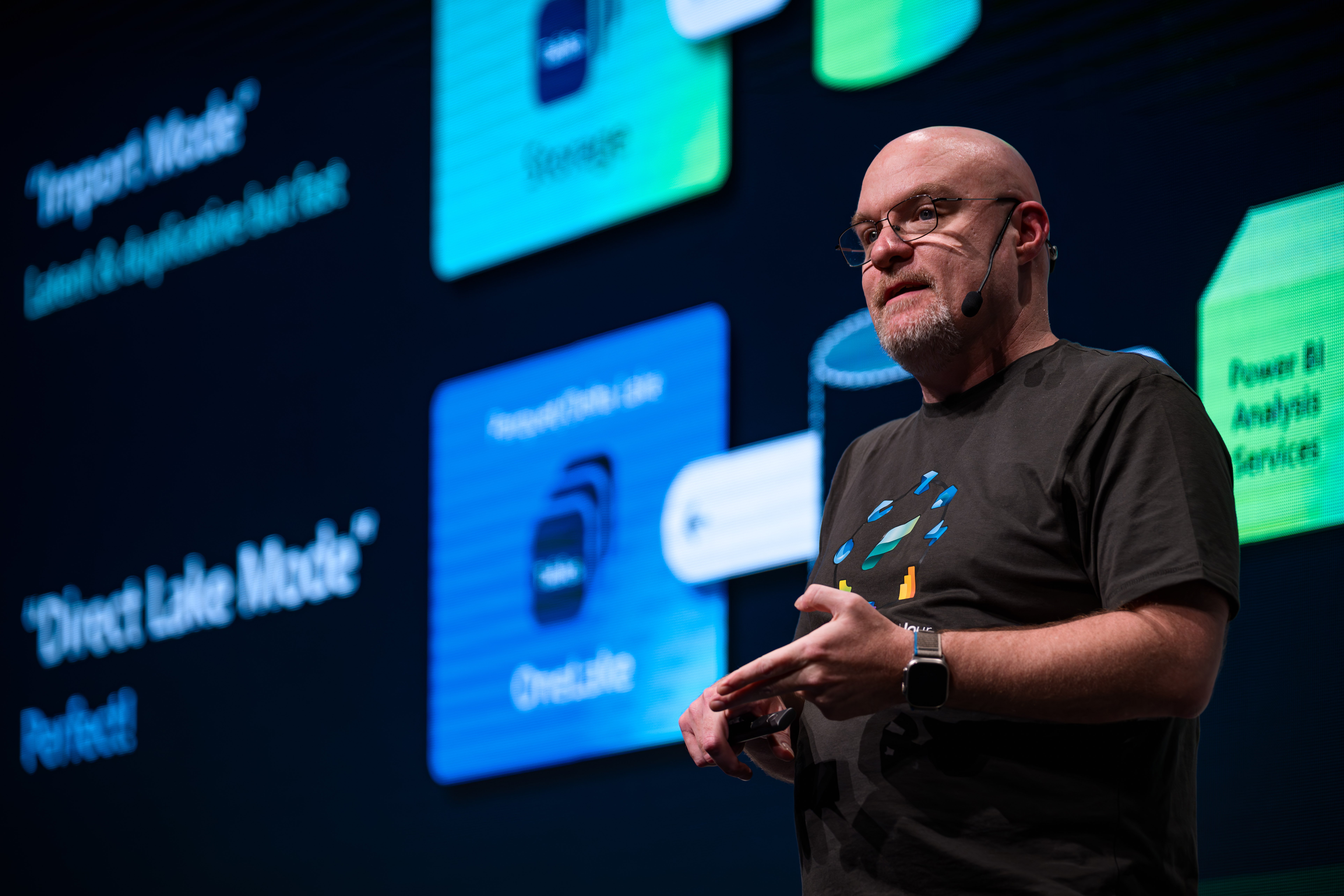
FABCON is the largest conference dedicated to Microsoft Fabric, bringing together tech enthusiasts, innovators, and industry leaders to explore the future of data, analytics, business intelligence, and AI integration. This dynamic event showcases cutting-edge developments within Microsoft Fabric, offering attendees the opportunity to learn from expert-led sessions, gain insights from Microsoft keynotes, and network with like-minded professionals.
With more than 200 sessions across every Fabric workload, attendees will gain practical skills, learn about the latest product announcements, and gain insights directly from the Microsoft teams building the Fabric platform. Additionally, there are over 20 full-day workshops attendees can choose to add to their program to start the week with focused training on key areas of interest.
For the first time, SQLCon will be co-located with FabCon attendees can take advantage of both conferences for the price of a single registration. Tracks span Azure AI Foundry, Power BI, Microsoft Purview, OneLake, Real-Time Intelligence, Data Development, and Fabric Admin & Governance.
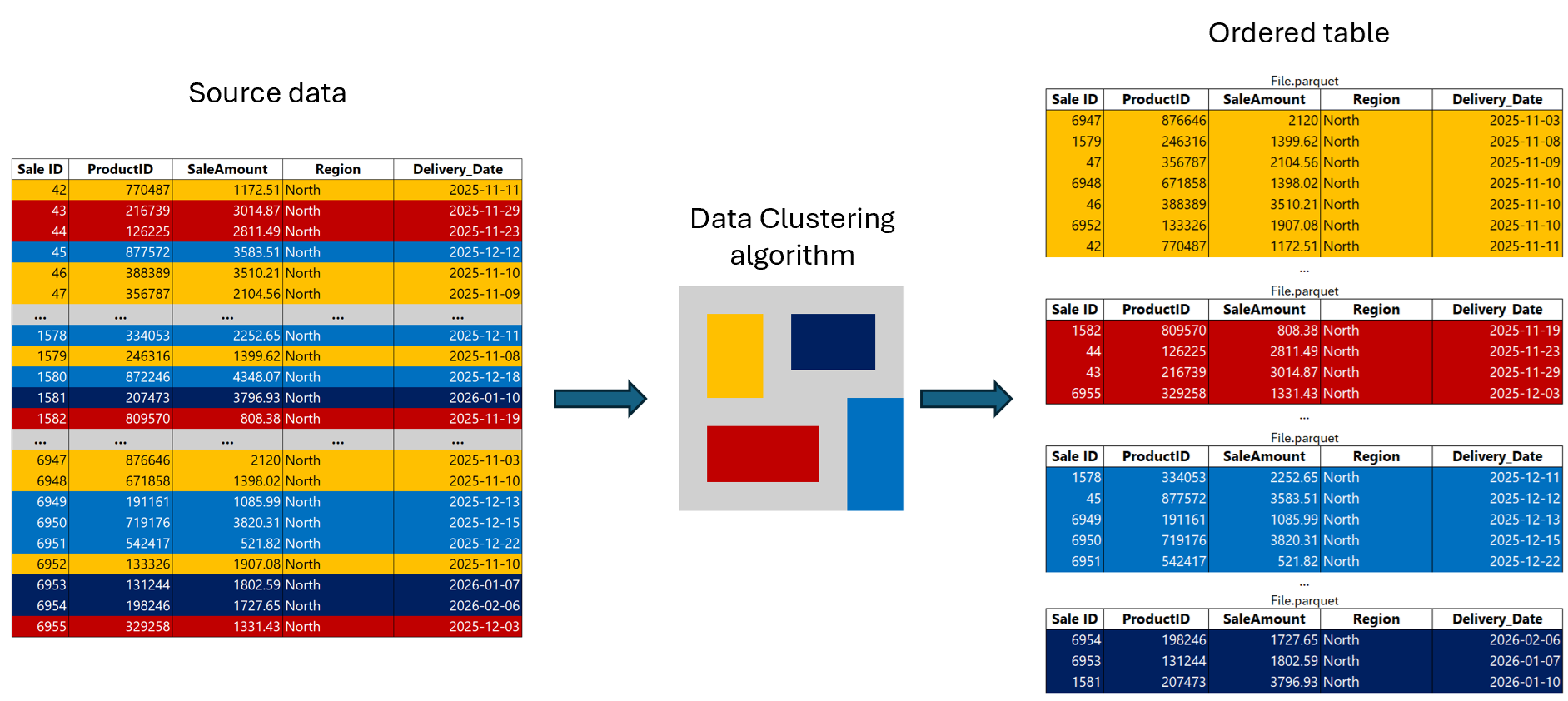
Data Clustering in Microsoft Fabric Data Warehouse is a technique that organizes and stores your data based on similarity. By grouping similar records together at the storage level, Data Clustering makes queries run faster and more efficiently and the Data Warehouse engine maintains your Data Clustering tables automatically, requiring no manual upkeep.
Data Clustering keeps related rows close together, allowing the engine to skip irrelevant files and row groups for queries that use WHERE predicates. The result is faster performance, lower compute costs, and reduced storage access. The new CLUSTER BY syntax supports up to four columns, giving teams precise control over storage alignment.
Start by identifying your highest-selectivity filter patterns, prototype cluster keys against a representative workload, and benchmark the performance delta before broader rollout.
Microsoft quietly dropped something significant in Fabric's operations and metrics surface: a new Anomaly Detector capability that transforms how administrators monitor capacity and workload behavior. This isn't just another dashboard update it's a fundamental shift from reactive troubleshooting to proactive intelligence. For too long, Fabric administrators have operated in a perpetual state of reaction: slow queries, unexpected pipeline failures, and throttling that kicks in during critical business hours.
The Anomaly Detector isn't just a threshold-based alerting system; it's an intelligent capability built into Fabric's Real-Time Intelligence stack. It automatically identifies unusual patterns in your data from Eventhouse tables, empowering administrators to monitor anomalies in real time without requiring data science expertise, using no-code tools for setup and continuous monitoring.
Enable anomaly detection on your highest-priority workloads, refine sensitivity thresholds with your operations team, and route alerts into your existing incident workflows.
December 2025 was one of the biggest months in Microsoft Foundry history. GPT-5.2 reached general availability as the new enterprise reasoning standard, with top benchmark scores across math, science, coding, and multimodal tasks. GPT-5.1 Codex Max also reached GA, delivering 77.9% on SWE-Bench, a 400K context window, and support for 50+ languages built for autonomous multi-agent coding pipelines, PR generation, and CI/CD integration.
Memory in Foundry Agent Service entered Public Preview, offering a managed long-term memory store with automatic extraction, consolidation, and retrieval across agent sessions. The Agent-to-Agent (A2A) Tool and the Foundry MCP Server also arrived in preview, and the azure-ai-projects v2 beta now unifies agents, inference, evaluations, and memory in a single package.
One critical action item: AzureML SDK v1 reaches end of life on June 30, 2026 migrate to SDK v2 now, as CLI v1 was already sunset in September 2025.
Microsoft Agent Framework is now in Release Candidate status for both .NET and Python. Release Candidate is an important milestone on the road to General Availability it means the API surface is stable, and all features intended for version 1.0 are complete. Whether you're building a single helpful assistant or orchestrating a team of specialized agents, Agent Framework gives you a consistent, multi-language foundation to do it.
As the successor to Semantic Kernel and AutoGen, it provides a unified programming model with simple agent creation, function tools with type-safe definitions, and graph-based workflows supporting sequential, concurrent, handoff, and group chat patterns. Multi-provider support spans Foundry, Azure OpenAI, OpenAI, GitHub Copilot, Anthropic Claude, AWS Bedrock, and Ollama, with full interoperability across A2A, AG-UI, and MCP standards.
Begin consolidating your agent prototypes on the RC, validate interoperability with your existing protocols, and design for production readiness ahead of the GA release.
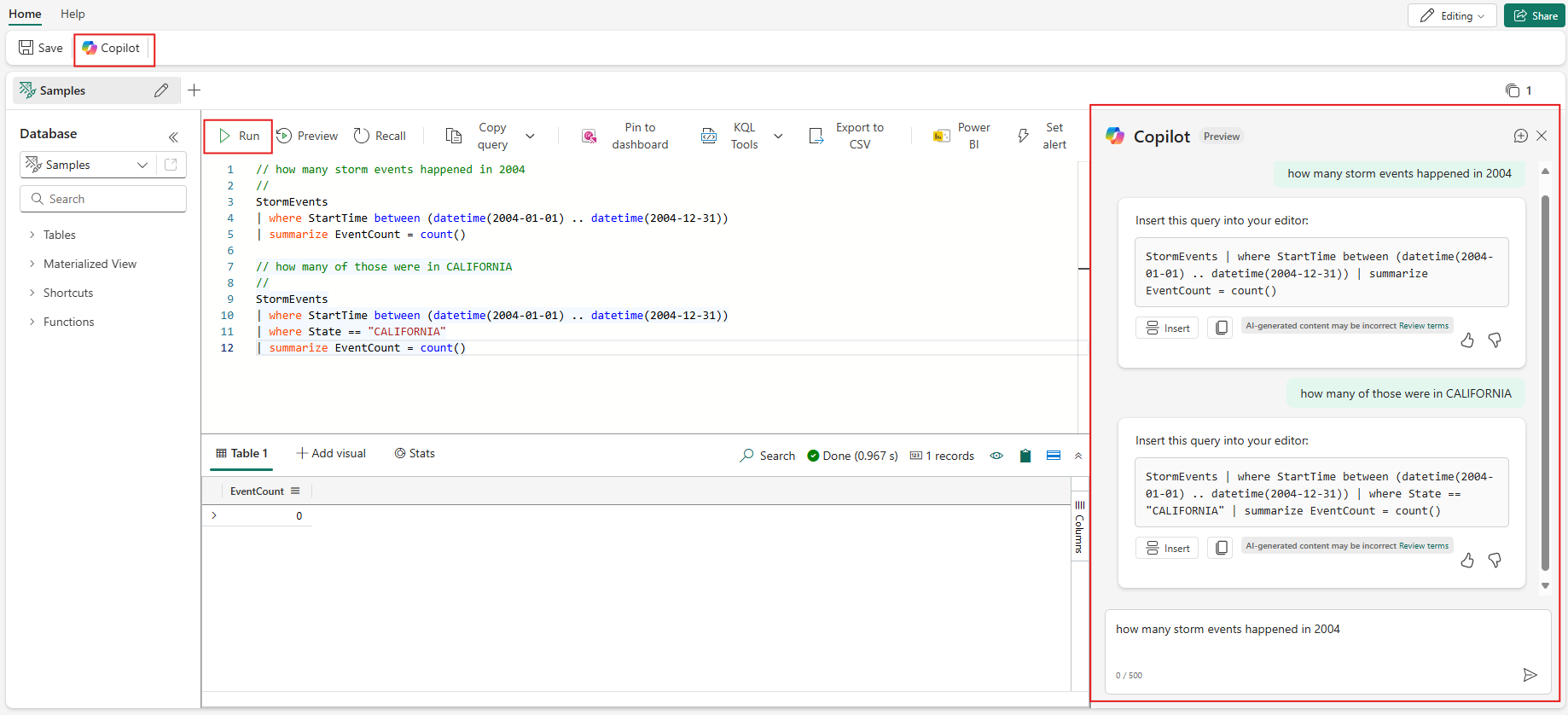
Copilot in Microsoft Fabric writes KQL queries from natural language by translating plain-English questions into executable queries against real-time data. Users ask a question in everyday language, and Copilot generates a valid KQL query that can be reviewed, inserted, and run directly in the query editor. This capability matters because it removes the technical barrier between questions and answers without hiding logic or compromising control.
One of the strongest design choices is that Copilot always shows the generated KQL before execution. Users can review it, modify it, or choose not to insert it at all keeping humans in the loop and avoiding the black-box problem often associated with AI analytics tools. For teams working with regulated or high-impact data, visibility matters as much as speed.
Copilot also supports conversational refinement after generating an initial query, users can ask follow-up questions and Copilot responds by generating a modified KQL query that builds on the original logic. Pilot this with your analytics and operations teams, establish prompt and review guidelines, and measure the productivity impact on query turnaround.
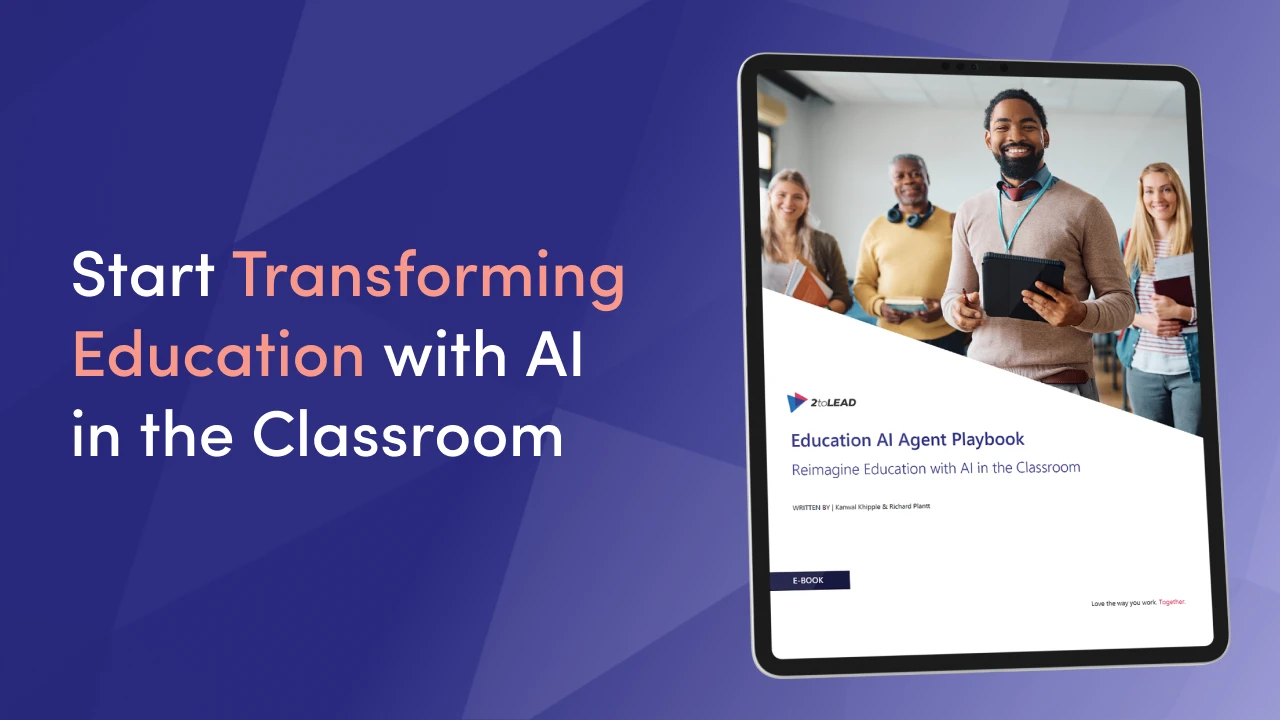
The Education AI Agent Playbook is a practical toolkit designed to help educators, administrators, and IT leaders harness the power of AI through Microsoft Copilot and the Power Platform. Created by 2toLead, this 24-page guide walks you through how to build and deploy intelligent, task-focused AI agents that streamline operations, enhance teaching, and personalize learning with step-by-step instructions and real-world use cases tailored for the education sector.
The playbook covers four agents: an AI Study Buddy, a Lesson Planner, a Degree Planner Agent, and a Faculty Assistant Agent. It is built with a privacy-first design agents don't store personal data or learn from individual interactions and integrates securely with Microsoft 365, including Teams, SharePoint, and Outlook.
Download and adapt the patterns to your institution's governance model and data boundaries.
The advances across Fabric and Foundry this month share a common thread: making it simpler to share data securely, act before incidents escalate, and deploy agents with the confidence that comes from a stable, governed foundation. The organizations pulling ahead in 2026 are not just experimenting they are building deliberate, integrated data and AI strategies that deliver measurable results across performance, cost, and trust. If any story in this edition aligns with your priorities for the year ahead, we are here to help you move from insight to implementation.


Join Our Newsletter