Security incidents don't pause for manual review. When a breach happens, investigators are racing the clock, searching through thousands of files to understand what data was exposed and who might be affected.
For most cybersecurity teams, the hardest question isn't "were we breached?" It's "what personal data was in scope, and what do we do next?"
Microsoft is addressing that gap head-on. Starting late April 2026, Microsoft Purview Data Security Investigations (DSI) is receiving a significant enhancement: a new AI-powered personal data examination capability that helps organizations identify and understand the presence of personally identifiable information (PII) within investigation datasets.
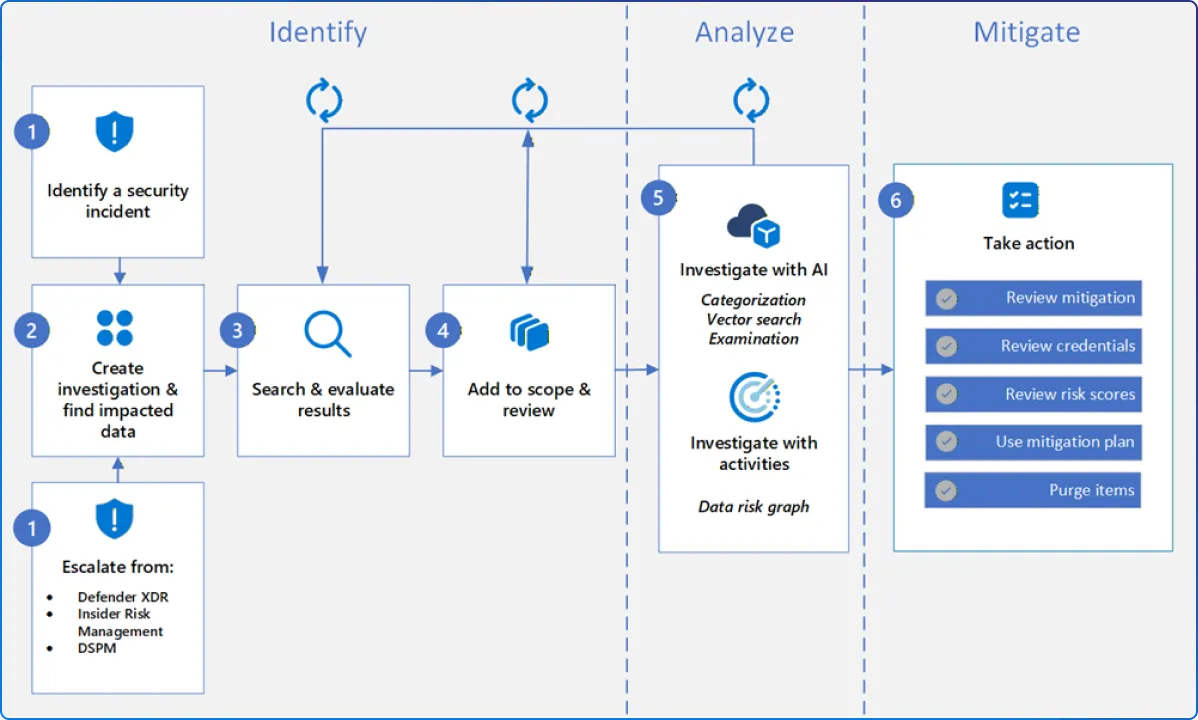
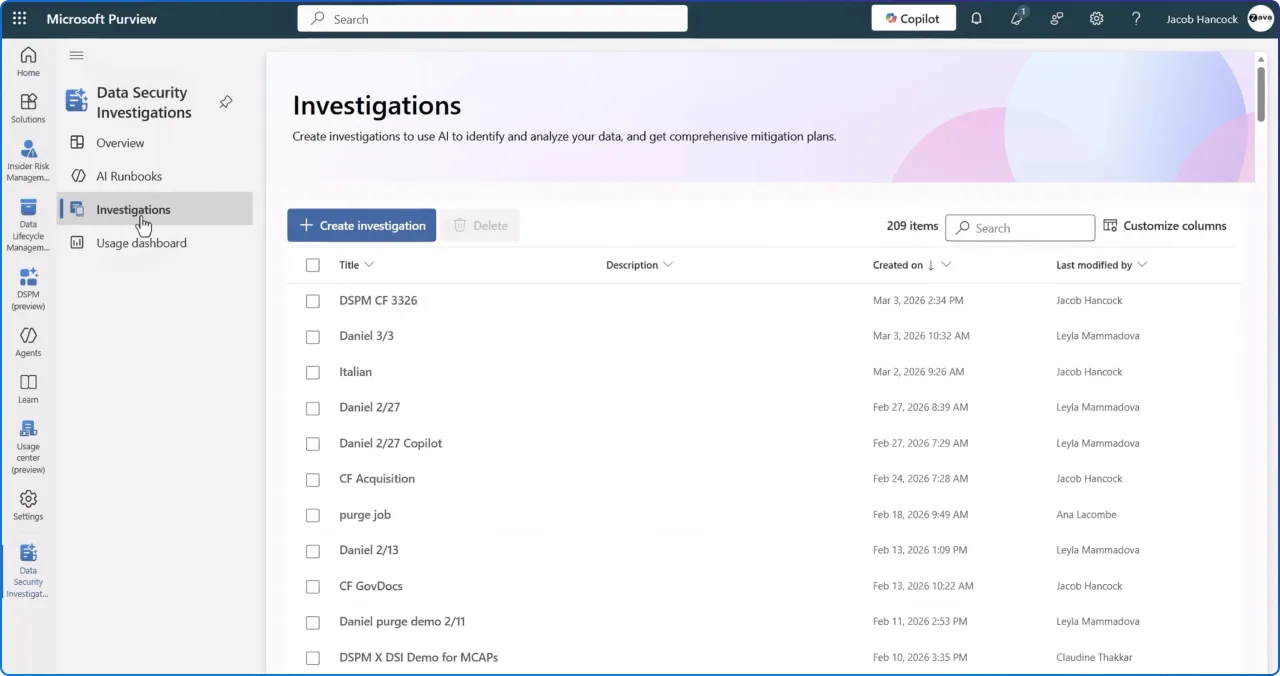
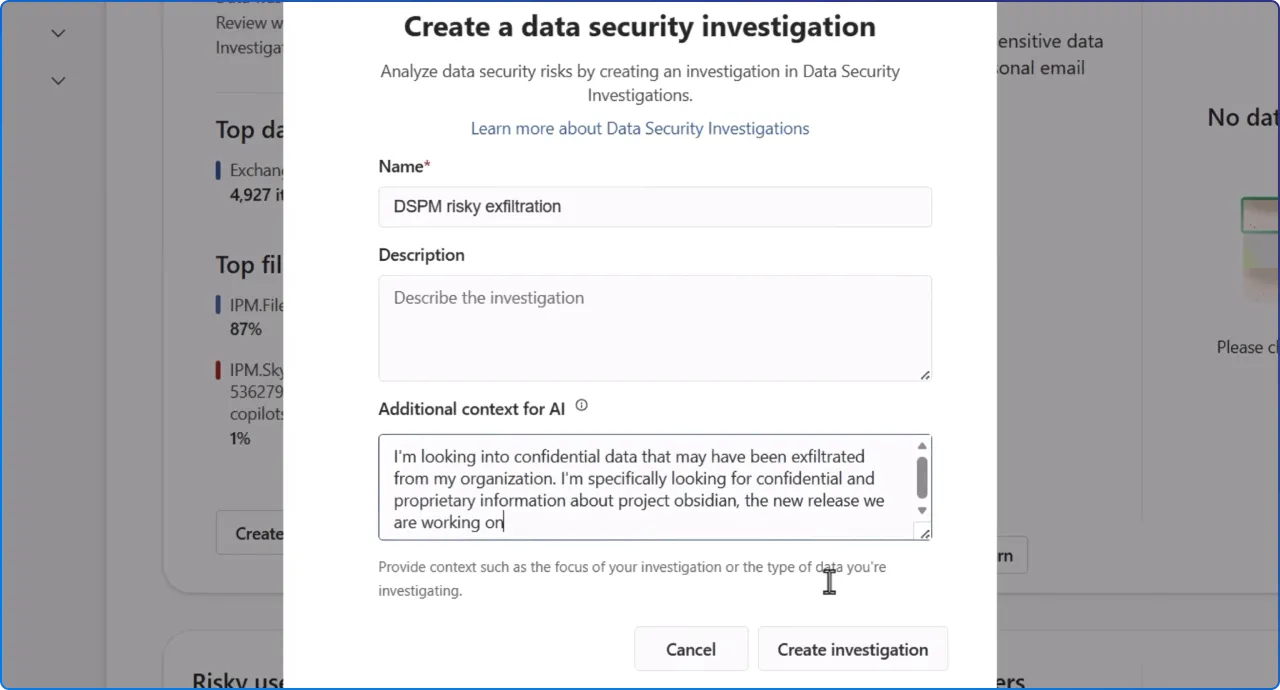
This update, tied to Microsoft 365 Roadmap ID 559388, is rolling out to General Availability (Worldwide) and is expected to complete by early May 2026. Before we dive into what's new, here's a quick look at how the Data Security Investigations workflow operates, from incident identification all the way through to mitigation.
The core challenge for any post-incident team is scope clarity: which files contain names, account numbers, or health records that could trigger regulatory notification requirements?
Historically, answering that question meant time-consuming manual review or building and maintaining custom tooling. After a data security incident, it can be difficult to understand the impact of sensitive data exposure.
As part of a mitigation strategy, investigators need to identify the intellectual property, personal data, and financial information that might be compromised, and some organizations build and maintain custom tools to investigate these issues.
The new personal data examination eliminates much of that friction. The analysis can identify and extract common types of personally identifiable information, such as names, addresses, and bank account numbers.
That means investigators spend less time manually scanning files and more time acting on verified findings, a critical shift when every hour of delay increases regulatory and reputational risk.
To appreciate the significance of this update, it helps to understand how AI examination already works inside Data Security Investigations (DSI). DSI uses generative AI to conduct deep content analysis and uncover key security and sensitive data risks for data included in investigations.
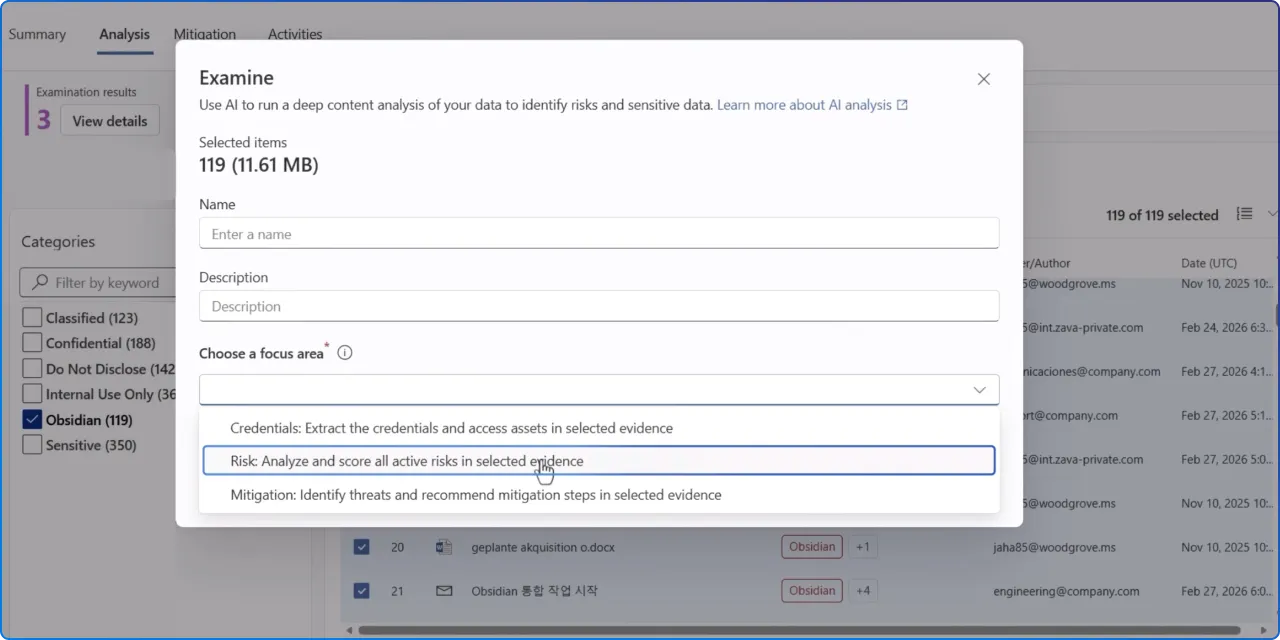
AI helps analysts quickly analyze large volumes of data with high accuracy, saving critical time for triage, review, and mitigation actions. Before this update, investigators could run three types of AI-powered examination:
The new personal data examination adds a fourth lens, purpose-built for privacy impact assessment. Use examination to run deep content analysis with AI on selected data items. This examination helps you find security risks buried within impacted data.
By examining impacted data for security risks, you can find credentials, network risks, or evidence of threat actor discussion. Once you identify security risks, you can scan for sensitive data, like personal data, financial, or health information.
This is additive and complements existing workflows. It's not a re-architecture; it's the logical completion of the investigation toolkit.
One of the most underappreciated pain points during a breach isn't the technical response, it's the compliance reporting that follows. Regulations like GDPR, HIPAA, and state-level privacy laws require timely notification when personal data is involved.
That notification window is tight and building the evidence record manually is painful.
Depending on the nature of the data involved and the jurisdictions affected, analysts might need to comply with regulatory requirements for breach notification.
Requirements that might include informing affected individuals, regulatory bodies, and other stakeholders about the nature of the breach and the steps taken to address it.
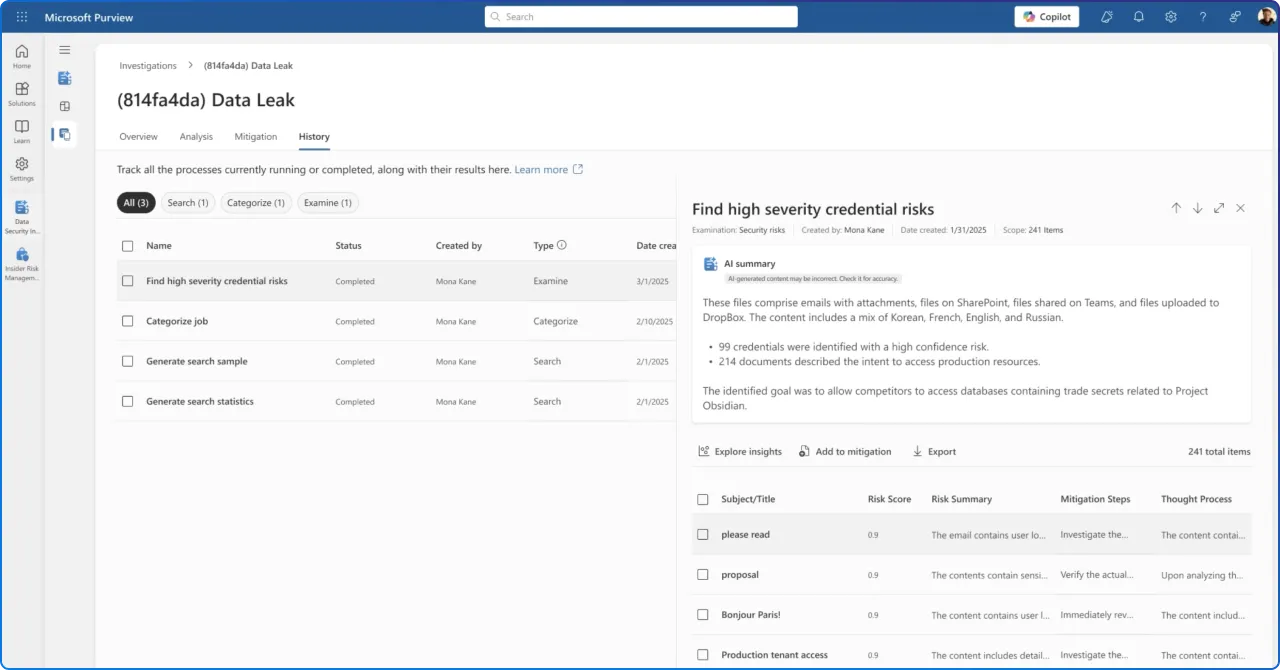
The new personal data examination turns a previously manual task into a structured, AI-assisted output. In addition to summarizing risks, Data Security Investigations provides mitigation steps and the thought process to explain the assessment.
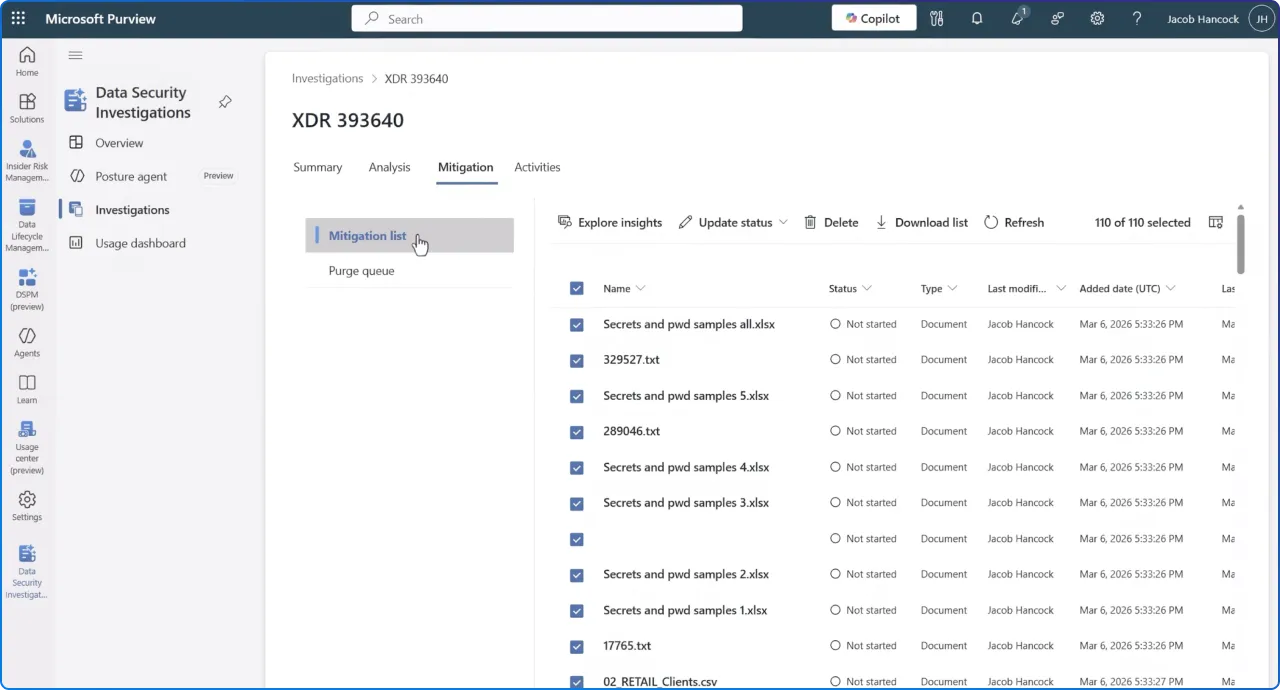
From here, you can add open issues to the mitigation plan, connecting analysis to mitigation. That means the personal data findings don't just sit in a report, they feed directly into your mitigation plan, creating an auditable evidence chain from detection to action.
This is exactly the kind of outcome-driven compliance tooling that turns a reactive response into a defensible process.
The good news for already-stretched IT teams: no admin action is required before the rollout. The feature is available by default and respects existing Purview permissions and investigation workflows. However, being proactive now will reduce friction when it goes live.
Here's where to focus:
Data Security Investigations was evaluated using a comprehensive set of metrics to ensure optimal performance and reliability, including AI accuracy, result relevance, and clarity.
These metrics are rigorously tested through a blend of manual red teaming and human grading, ensuring the system meets high standards of precision and effectiveness. That matters when you're relying on AI output to make compliance decisions. Your team should approach results as high-quality triage, not as final legal determinations.
Microsoft Purview Data Security Investigations helps cybersecurity teams use generative AI to analyze and respond to data security incidents, risky insiders, and data breaches.
This helps organizations quickly identify risks from sensitive data exposure and more effectively collaborate with partner teams to remediate issues, simplifying tasks that are traditionally time consuming and complex.
The personal data examination capability is a meaningful step forward in that mission. It directly addresses the gap between detecting a breach and understanding its privacy impact; a gap that has historically required significant manual effort, custom tooling, or outside expertise.
If your team is already using DSI for credential and risk examination, this update slots in with minimal disruption.
If you haven't yet operationalized DSI's AI examination features, now is the right time to review your investigation playbooks and ensure your team is positioned to use every tool available.
Let's map out how this fits your current investigation workflow. A focused readiness review can confirm your Purview configuration is aligned, your teams are trained, and your compliance posture is current.


Join Our Newsletter