Microsoft's AI announcements at Microsoft Ignite 2025 showcased one of the most significant shifts in how organizations build and customize AI. This year's updates focused heavily on Azure AI Foundry and its rapidly growing ability to help teams fine-tune models, generate training data, and experiment at a lower cost. These changes make it easier than ever to adapt AI to real business problems. The goal is simple: unlock smarter, faster, and more reliable AI for everyone.
The highlight of Ignite 2025 is the push toward custom AI model training, powering solutions that meet companies' needs rather than relying on generic, one-size-fits-all models. With new tools, new models, and more affordable training options, Microsoft is creating an environment where developers and teams can take control of their AI journey with confidence.
In the past, companies relied on large AI models that could answer general questions but struggled with specialized tasks. This gap meant that organizations often had to choose between expensive manual work and imperfect AI results. The new focus on AI fine-tuning models directly addresses this challenge.
Fine-tuning allows teams to adjust a model using their own data so that it understands industry-specific language, company workflows, and unique tasks. At Microsoft Ignite 2025 AI, Microsoft demonstrated how organizations can achieve significant improvements from even small amounts of fine-tuned data. Some businesses reported up to 50% lower costs and much faster response times simply by fine-tuning a model to their specific workloads.
As AI adoption grows, fine-tuning becomes essential. It helps organizations ensure that AI is not only intelligent but also accurate, relevant, and aligned with how people actually work every day.
Ignite 2025 introduced several new models in Azure AI Foundry, giving teams more flexibility in how they train custom AI models. These additions include open-source options such as Qwen3 32B, Ministral-3B, GPT-OSS-20B, and Llama 3.3 70B. Each model offers different strengths, allowing developers to select the one that best matches their needs.
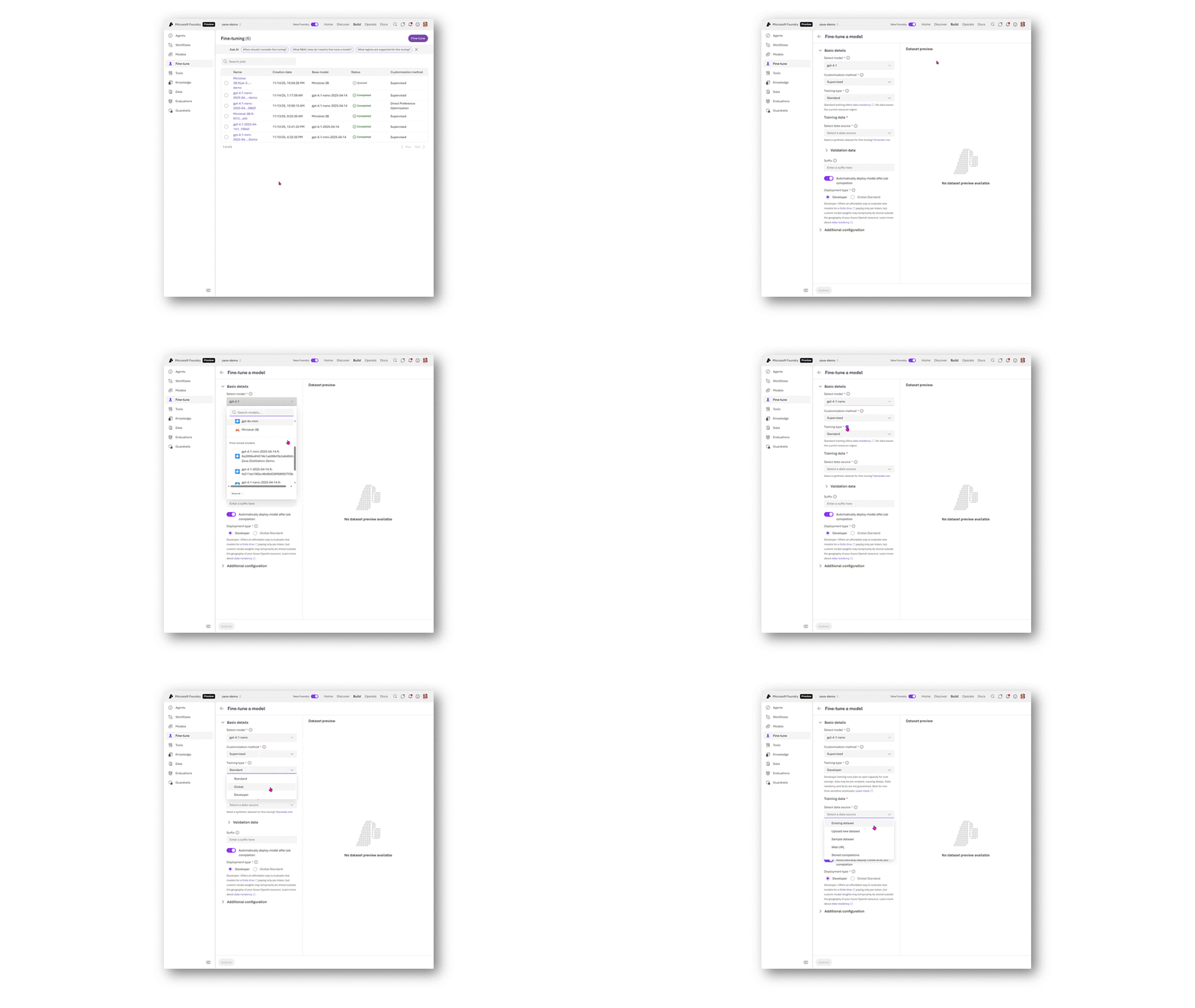
Some organizations benefit from smaller, fast, cost-efficient models, while others rely on larger models with deeper reasoning capabilities. With this expanded library, businesses no longer need to settle for a model that does "okay" across many tasks. Now, they can choose a model that handles their exact workload with more precision.
These options are especially valuable as companies experiment with more advanced AI systems. With the right model and proper tuning, AI can understand longer documents, write more accurate responses, support complex workflows, or integrate with tools and APIs more effectively.
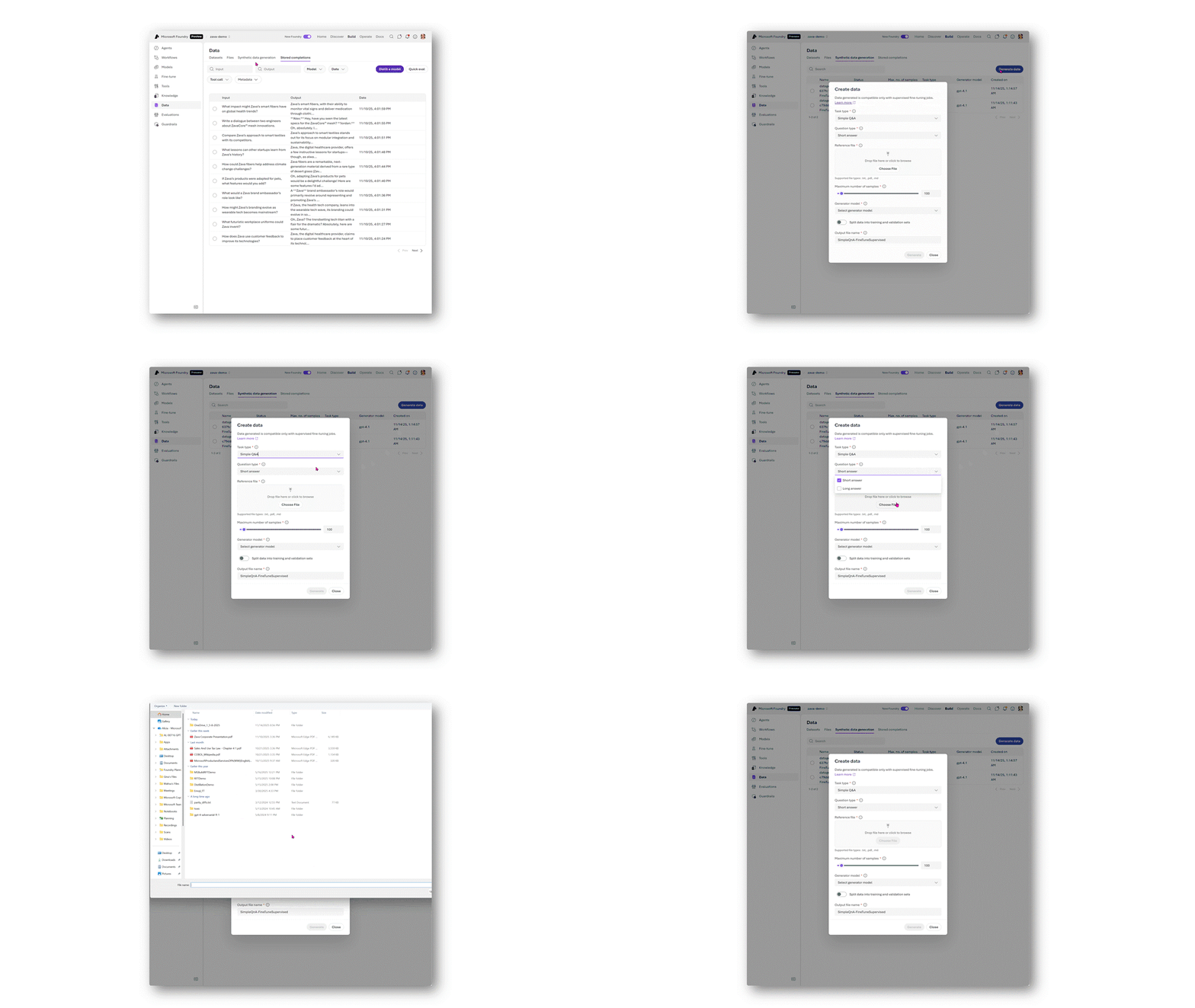
Training a model requires high-quality data. Until now, creating datasets large enough for AI fine-tuning models has been one of the most time-consuming challenges. At Ignite 2025, Microsoft introduced a new synthetic data generation tool in Azure AI Foundry that completely changes this.
This tool lets developers upload documents such as PDFs, manuals, or knowledge base articles and automatically generate realistic training examples. Instead of manually writing hundreds or thousands of prompts, the system produces them instantly. This not only saves time but also ensures that fine-tuning is based on the right kind of data, aligned with the information a business uses every day.
This feature makes custom AI model training accessible even to teams without ample data science resources. Small organizations, educators, and developers can now produce high-quality datasets without needing technical expertise.
One of the most important announcements among the Azure AI updates was the launch of a more affordable training tier. The new Developer Training tier offers up to a 50% discount for fine-tuning jobs when teams use pre-emptible compute. This is a significant step forward for organizations that want to test, experiment, and explore fine-tuning without overspending.

Teams can now run multiple fine-tuning experiments simultaneously, reducing the risk of failure and accelerating innovation. Instead of waiting for a single test to finish, developers can compare results, adjust parameters, and refine their models in parallel.
This is especially helpful for startups, small businesses, and educational teams that want the power of fine-tuning without enterprise-level budgets. By reducing hardware costs and adding flexibility, Microsoft is making AI development more inclusive and widespread.
A standout moment at Microsoft Ignite 2025 AI was the introduction of Agentic Reinforcement Fine-Tuning (RFT). This new technique goes beyond simple pattern matching and teaches models how to take actions, make decisions, and complete multi-step tasks.
Traditionally, AI models respond to prompts based on examples they've been trained on. But Agentic RFT allows models to learn from simulated experiences, improving their decision-making skills in real-world workflows. This means AI can better select the right tools, interact with APIs, and complete tasks like submitting forms, gathering data, or performing checks.
Although it's currently in private preview, Agentic RFT signals a significant shift in how AI assistants and automation systems will function. The future is not just about answering questions; it's about taking action.
Beyond all the technical upgrades, Microsoft focused heavily on improving the user experience. Azure AI Foundry now offers a cleaner, unified interface that brings all fine-tuning features together. Developers can browse models, generate data, start training jobs, and track performance in one place.
This smoother workflow means teams can spend less time on setup and more time building great AI applications. The unified experience supports beginners and experts, empowering everyone to use Azure AI updates more efficiently.
Ignite 2025 made it clear that the future of AI is personalized, affordable, and accessible. With an expanded library of models, advanced fine-tuning techniques, and robust data tools, organizations now have everything they need to build AI that truly works for their needs.
Fine-tuning is no longer a niche skill; it's becoming the foundation of modern AI development. And with Azure AI Foundry leading the way, every business can create custom solutions that reduce costs, increase accuracy, and transform the way people work.


Join Our Newsletter