
More often, the answer already exists. It is simply living in the wrong form, in the wrong place, or without a clear path from conversation to trusted content. That is why repeated questions deserve more attention than they usually get. They are not just signs of confusion. They are signals. They reveal where people need support, where findability is weak, and where the digital workplace has a chance to work more intelligently.
This matters even more now because Viva Engage is becoming more intertwined with the everyday Microsoft 365 experience. Recent 2toLead content has highlighted how Viva Engage communities are moving closer to Teams, how community conversations can connect more naturally with SharePoint content, and how AI-driven experiences are beginning to turn community activity into a more useful knowledge layer.
This raises an important question for community managers, communicators, and digital workplace leaders. How do we turn repeat questions into trusted answers?
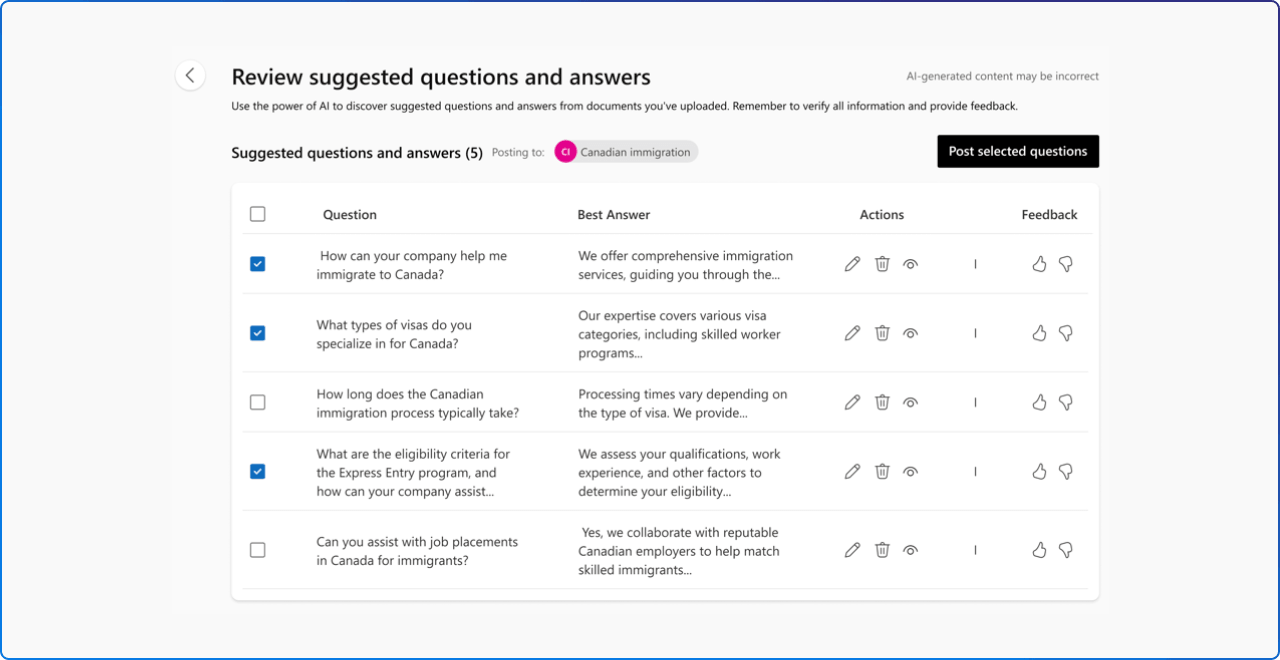
It is easy to see repeated questions as noise. But they often tell us something useful.
They usually mean one of four things:
That is valuable information. Instead of viewing recurring questions as something to shut down, organisations can treat them as clues. They point to areas where communication, knowledge design, or content structure needs improvement. They also reveal where communities are surfacing real demand that formal content has not yet fully met.
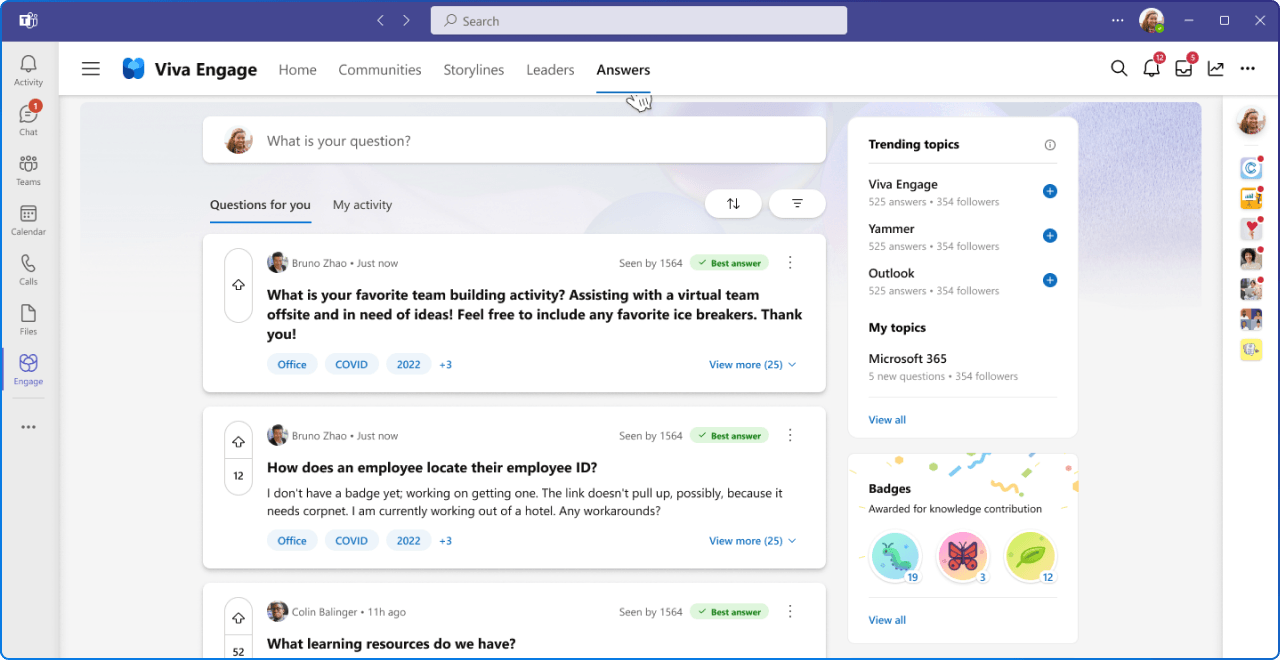
Some questions benefit from open discussion, follow-up, and peer insight. That is where Viva Engage adds real value. Communities create space for people to ask questions in plain language, share practical experiences, and build understanding through conversation.
This is especially useful during change, adoption, or uncertainty. Employees often need more than a formal explanation. They need context. They need examples. They need reassurance from peers who are navigating the same thing.
That kind of interaction is not a weakness in the knowledge model. It is a healthy part of it.
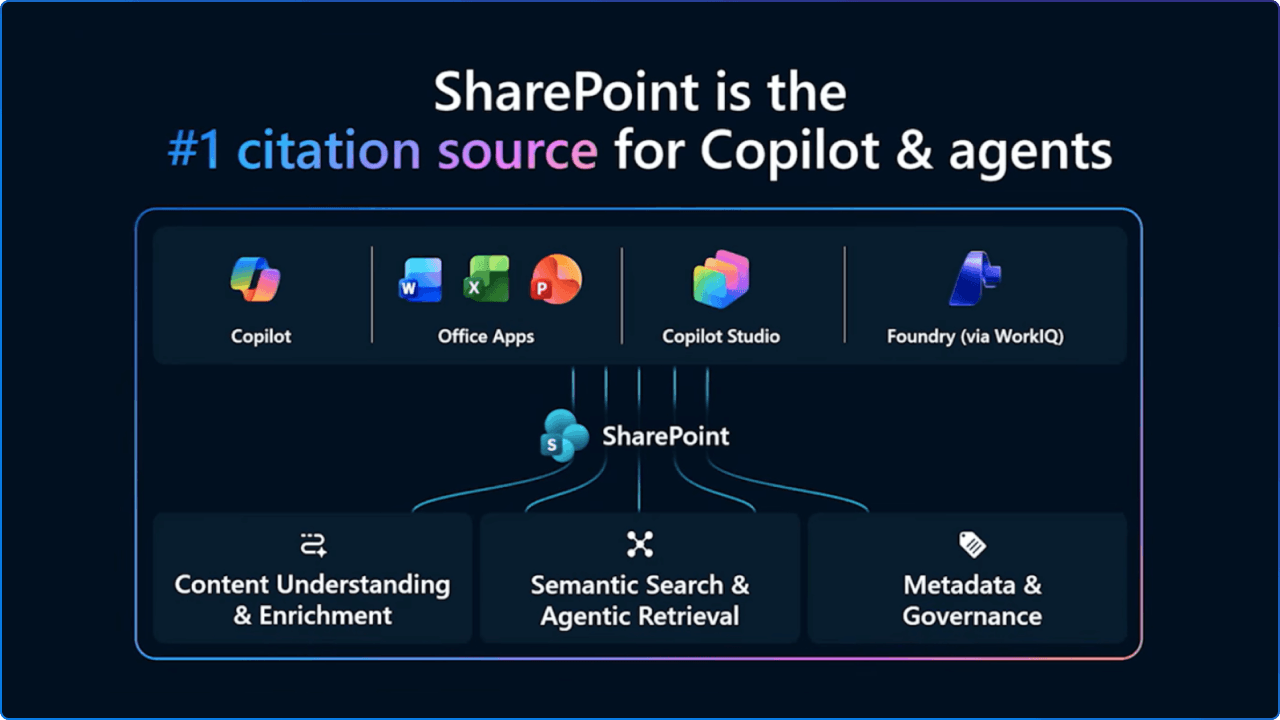
At the same time, not every useful answer should remain buried in a thread. That is where SharePoint becomes essential. When information needs to be durable, structured, and easy to reference later, it needs a stronger home. That includes:
This is where many organisations get stuck. They either leave too much inside conversations, where answers become hard to rediscover, or they push everything into formal pages, where content may be technically available but disconnected from the real questions people are asking.
The better model is not conversation or structure. It is conversation feeding structure.
A healthy flow often looks like this:
That answer is then linked to, strengthened by, or elevated into trusted SharePoint content. Over time, this creates a stronger loop:
That is one reason why the current direction of Viva Engage feels more important than it might first appear. The value is not only in community activity itself. It is in the way communities can now support a more visible, reusable, and intelligent knowledge experience across the wider digital workplace.
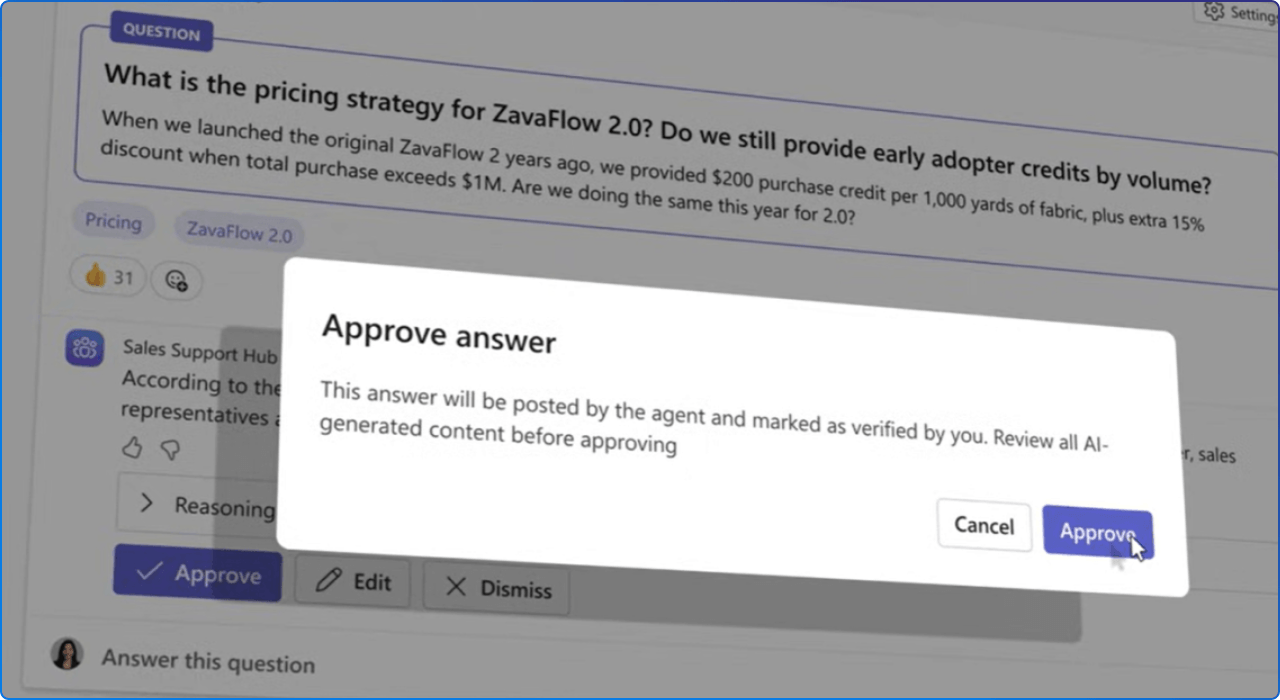
This is the part many organisations underestimate. The moment communities begin influencing how knowledge is created, surfaced, or trusted, governance questions become more important:
These are great questions to be asking and are not minor operational details. They shape trust.
That is why role clarity matters from the start. The Viva Engage Permissions Toolkit is designed to help organisations understand the features, settings, and configurations available to different Viva Engage administrative roles so responsibilities can be assigned more intentionally and governance can scale more effectively.
If communities are going to support a more trustworthy knowledge model, ownership and permissions cannot be treated as an afterthought.
The goal is to recognise when an answer has proved its value and deserves a better home, stronger visibility, and clearer ownership. Viva Engage is powerful because it helps people ask, respond, and learn together. SharePoint is powerful because it gives valuable answers a more durable place to live once they matter beyond the moment.
Used together, they can reduce repeated effort, improve trust, and make organisational knowledge more useful over time.
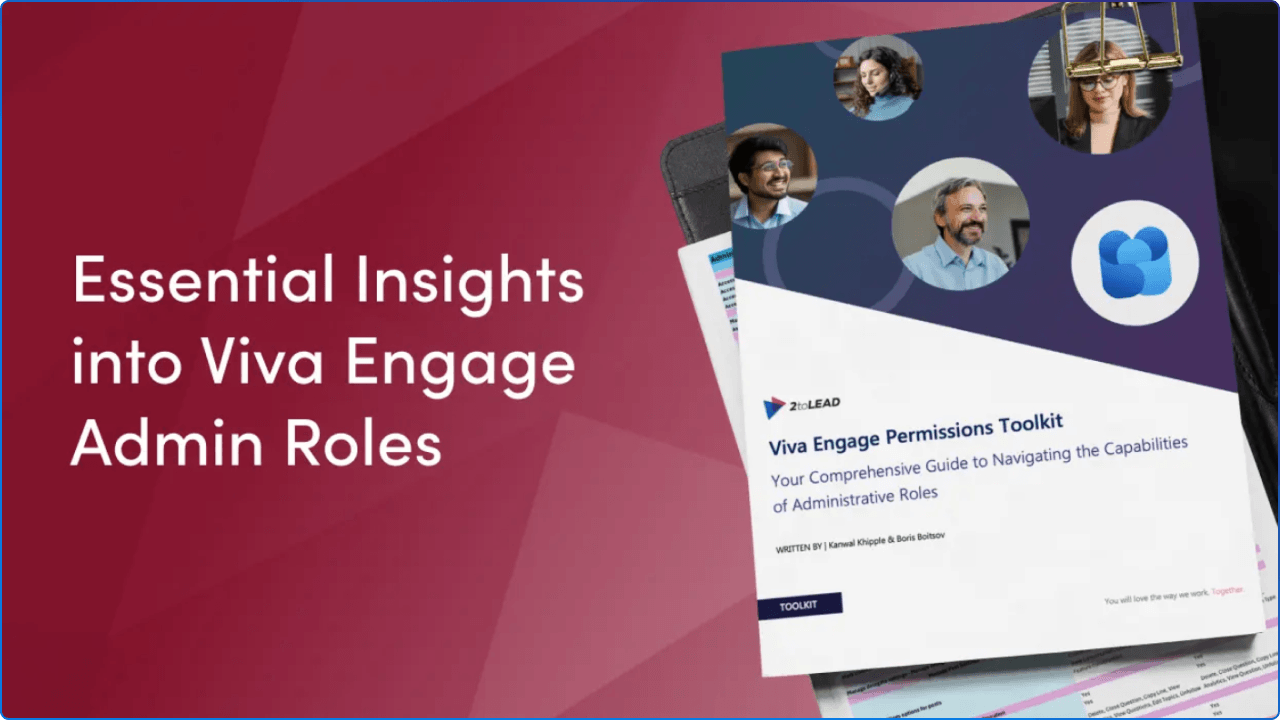
If your organisation is serious about turning community activity into a stronger knowledge flow, our Viva Engage Permissions Toolkit is a practical next step. It can help clarify roles, responsibilities, and the governance structure needed to support communities more confidently at scale.
Download our Viva Engage Permissions Toolkit to clarify roles, responsibilities, and governance from the start.


Join Our Newsletter