We explored this idea in a previous article focused on turning repeat questions into trusted answers. In most cases, we've already got the content, the answers and all the necessary information available to us. The problem is sourcing the correct content in the appropriate places and also building trust into our internal communications.
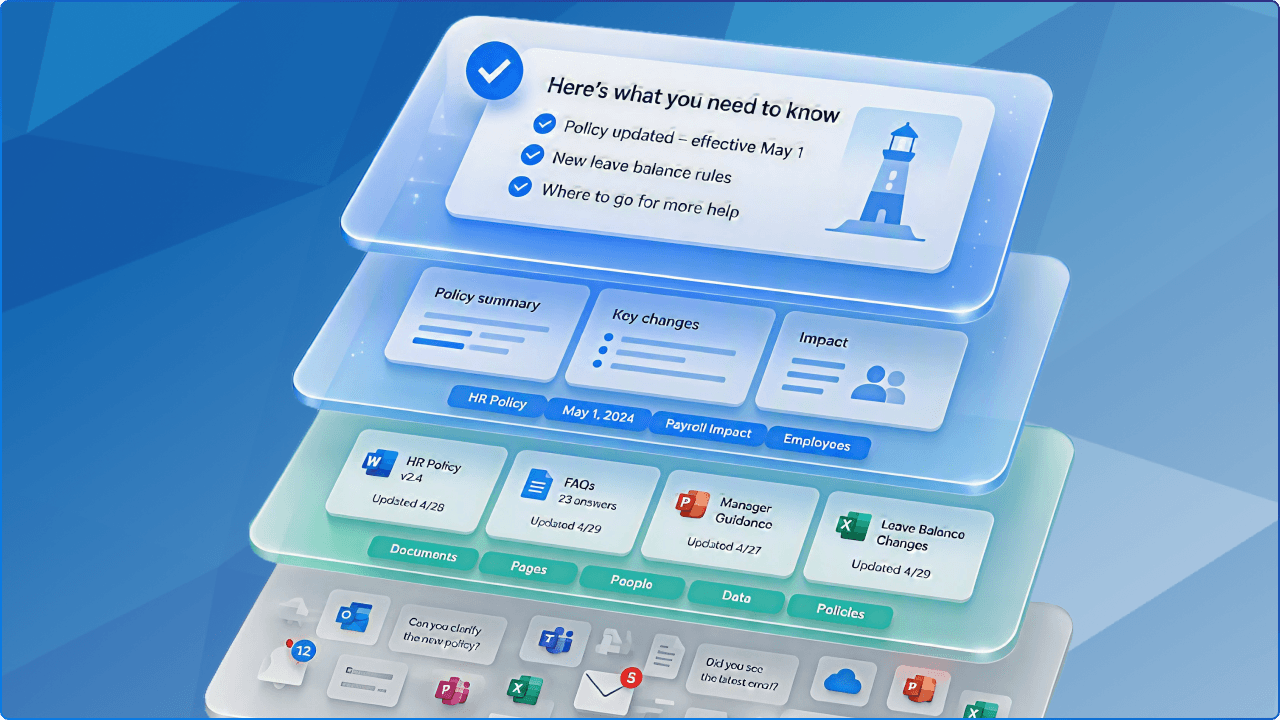
Every organisation has content. News posts, policy updates, community discussions, documents. It all exists. Yet employees still ask the same questions, search multiple places, or rely on word of mouth instead of official channels. That’s not a content failure. It’s a trust failure.
If the digital workplace is meant to inform, guide, and connect employees, then trust is the invisible layer that determines whether any of it actually works.
In a world shaped by AI, Copilot, and increasingly intelligent systems, that trust layer has never mattered more.
Microsoft’s latest investments in Copilot and AI agents make one thing clear. Content is no longer just read. It is interpreted, summarised, and surfaced automatically.
For example, Copilot in Viva Engage can now summarise conversations, highlight key themes, and help employees quickly understand what matters without reading everything. At the same time, AI-powered agents can answer questions using community conversations and SharePoint content as their source of truth.
That changes the equation. Your content is no longer passive. It is actively shaping answers.
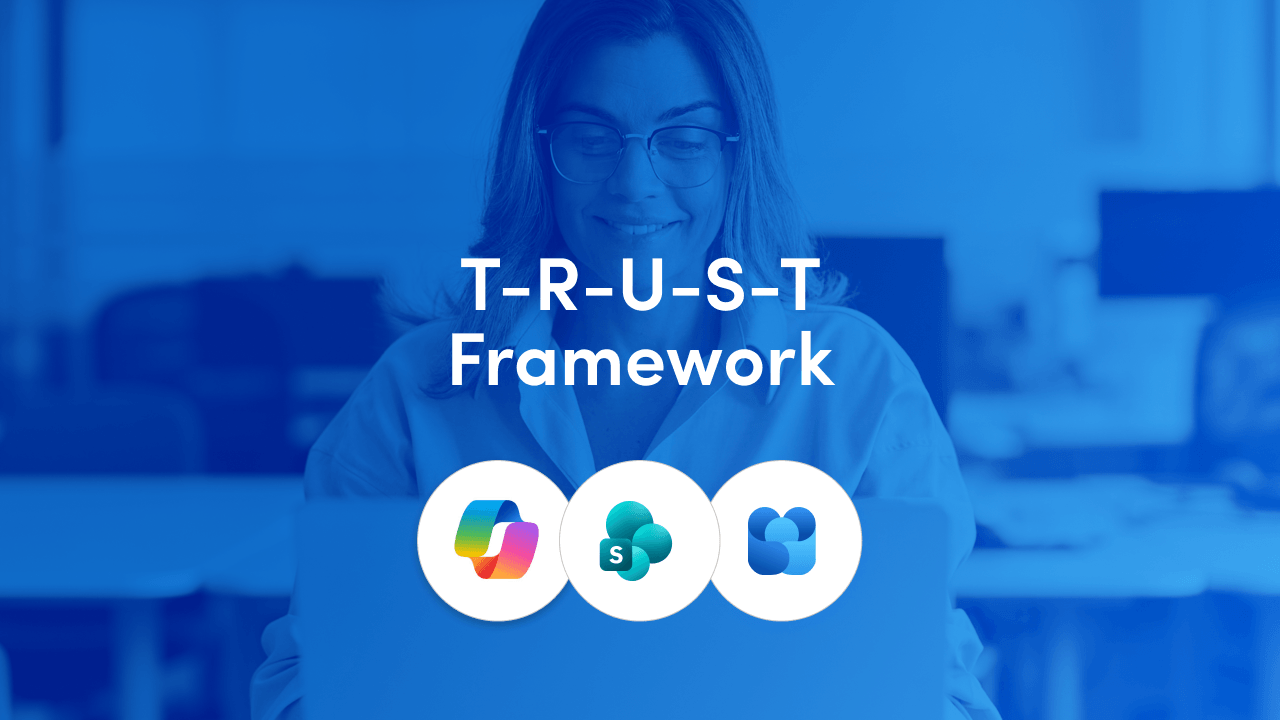
To design for this new reality, we need to think beyond tools and features. We need a simple way to evaluate whether content earns trust.
Here’s a practical model you can use across your digital workplace:
Content reflects what is happening now.
Outdated content quietly erodes confidence. Employees stop checking official sources if they suspect the answer might be old.
Content is tailored to the audience. Platforms like SharePoint, Teams or Viva Engage are designed to deliver personalised, role-based information so employees see what actually matters to them.
Relevance is not a nice-to-have. It is the difference between engagement and noise.
Content is clear, simple, and easy to act on.
If employees need to interpret or translate internal communications, they will default to asking someone instead.
Content is organised and findable. This is where SharePoint plays a critical role. Governance and information architecture define how content is created, organised, and maintained so people can find and rely on it.
Without structure, even good content becomes invisible.
Content has clear ownership and credibility. Employees trust content that feels authoritative, consistent, and aligned with leadership messaging. SharePoint now has authoritative sites to help signal official org sources.
When Copilot agents pull answers from SharePoint sites and Viva Engage communities, they rely entirely on the quality and credibility of those sources.
No trust at the source means no trust in the outcome.
Most digital workplaces are designed around publishing, not trust. We focus on:
These happen with good intentions. But we overlook the signals employees actually use to decide if something is worth their attention. Common symptoms include:
This is where trust breaks down. And once it does, it’s hard to rebuild.
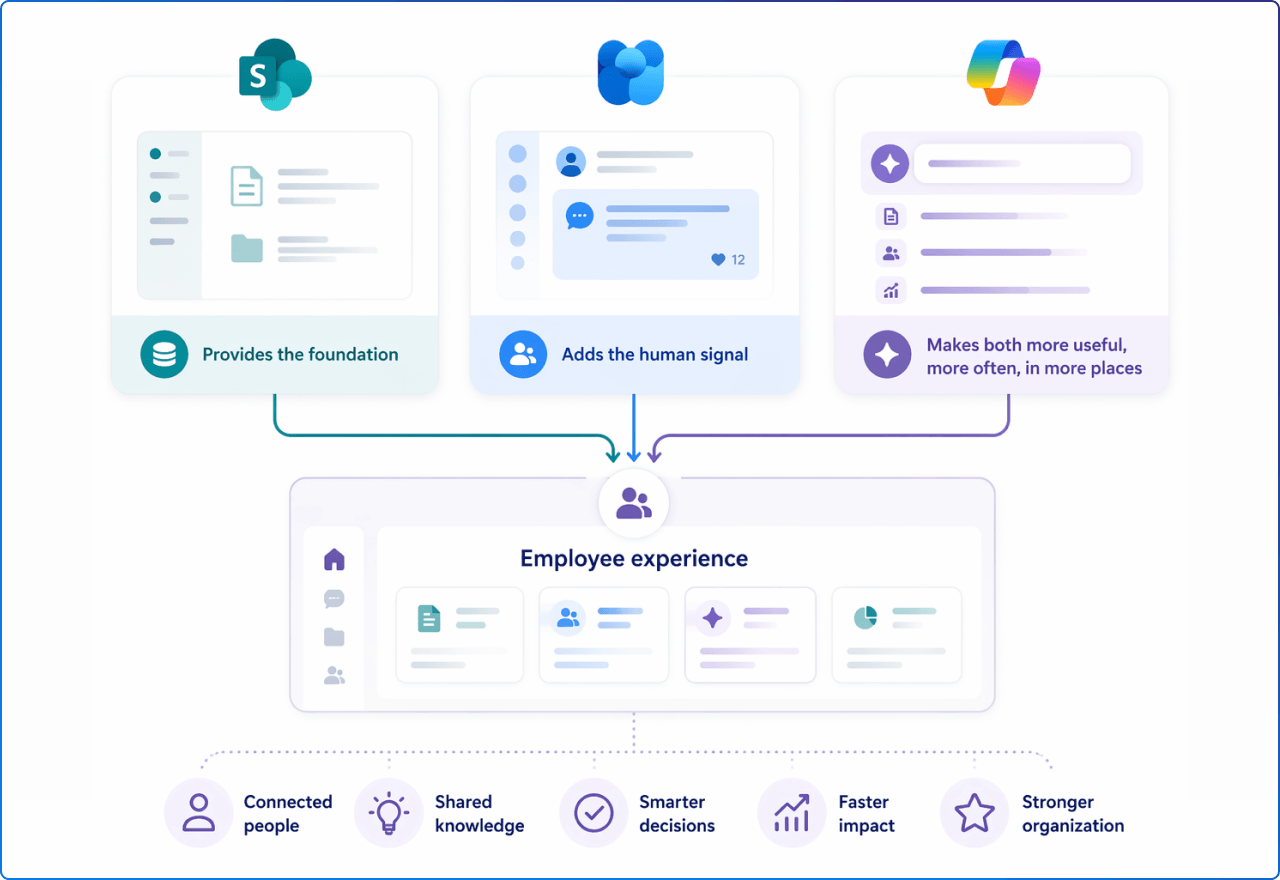
This is not about choosing one tool over another. It’s about how they work together.
When aligned, this creates something powerful:
A workplace where employees don’t just find information. They trust it.
And when that happens:
We explored this concept around where the message should live in a previous blog article.
If your environment is filled with outdated, duplicated, or unclear content, Copilot will still generate answers. But those answers may be inconsistent, incomplete, or misunderstood.
On the flip side, when your content is governed, structured, and trusted, AI becomes a multiplier.
In other words, trust becomes the prerequisite for AI value.
We recently looked at how Copilot is already reshaping internal communications here: New Copilot Features for Internal Comms Teams
You don’t need a full redesign to improve trust. Start small and focused:
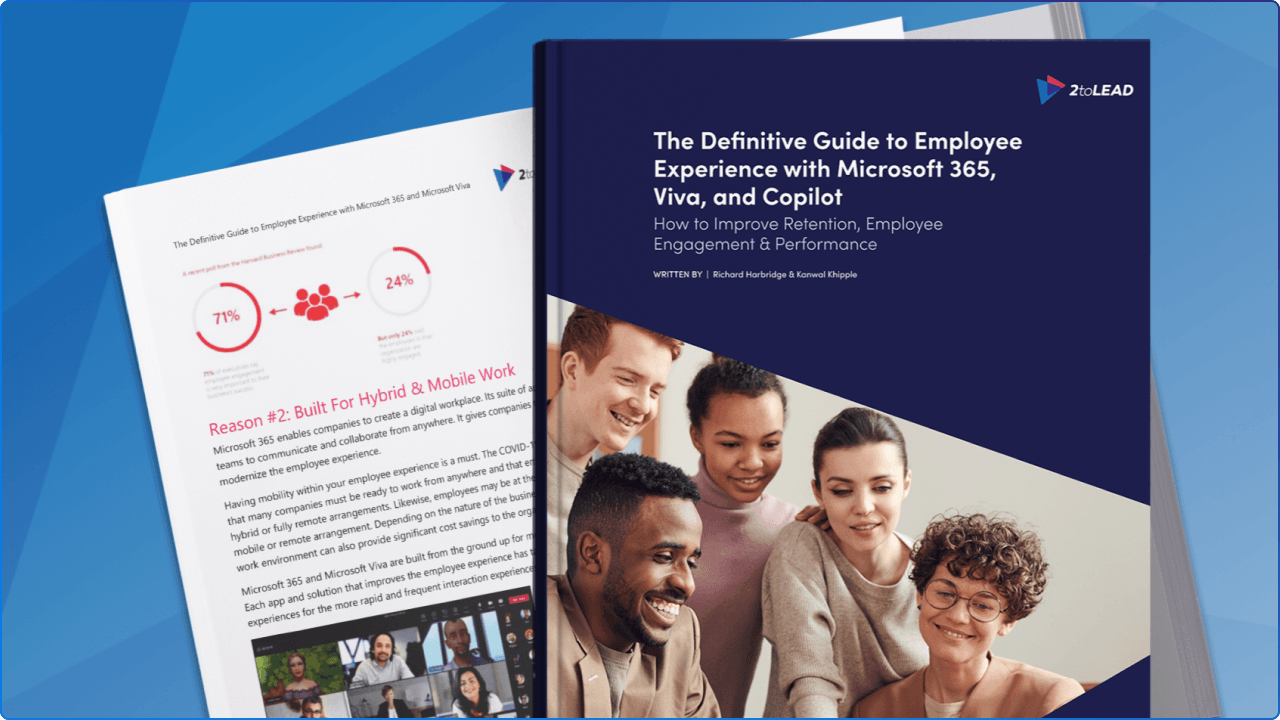
If you’re looking to design a digital workplace that employees actually trust, we’ve put together a detailed guide that walks through the full employee experience. Take a closer look at our playbook: The Definitive Guide to Employee Experience with Microsoft 365, Viva and Copilot. In it, we help you understand what Employee Experience is and how it relates to Microsoft 365, Viva and Copilot.


Join Our Newsletter