The most expensive automation mistake often happens before anyone builds a thing.
Download Kanwal Khipple’s practical framework for qualifying automation opportunities, evaluating complexity and risk, testing the value case, and deciding what should move forward before development begins.
Automation and agent initiatives do not always struggle because of poor execution. Sometimes the real problem starts earlier:
The wrong process was selected. The value case was never tested. Complexity was underestimated. Governance entered the conversation too late. Or the team started building before agreeing on what success should look like.
This presentation gives you a more disciplined way to evaluate an opportunity before time, budget, and development capacity are committed.
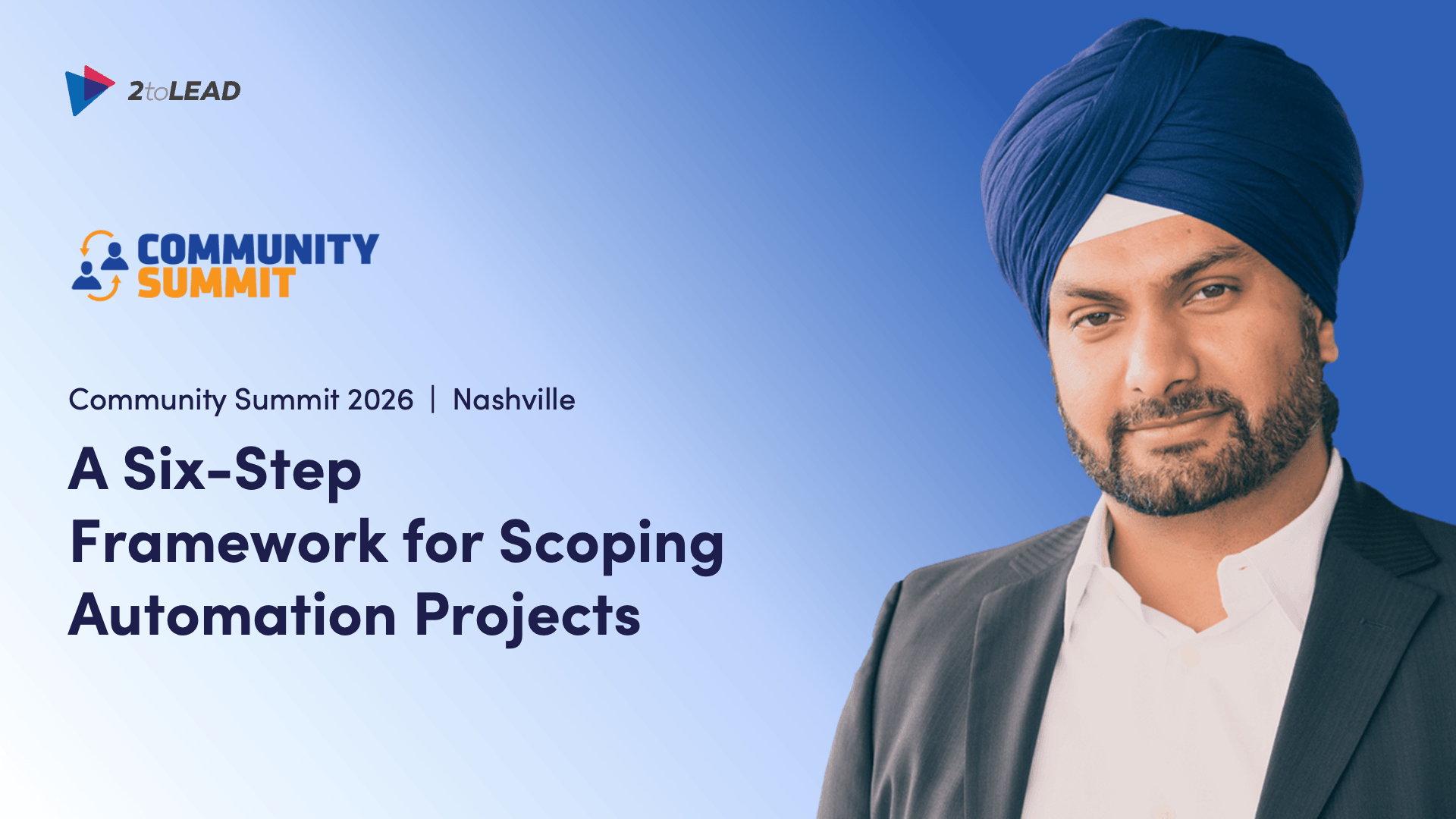
Originally prepared for Kanwal Khipple’s Community Summit North America 2026 session, the deck introduces a six-step discovery framework for scoping automation and Copilot Studio engagements through process qualification, complexity and risk scoring, stakeholder mapping, build-versus-buy consideration, and a clear go/no-go decision.
Separate high-potential automation opportunities from processes that are unstable, poorly understood, or unlikely to deliver meaningful value.
Use a more structured scoring approach to assess competing opportunities instead of relying on whichever request is the loudest or most urgent.
Surface dependencies, exceptions, data considerations, governance needs, and delivery risks while there is still time to change direction.
Identify the stakeholders, process owners, decision-makers, subject-matter experts, and affected teams that need to be involved.
Introduce a lightweight check to determine whether the right answer is a custom automation, an existing capability, a process change, or no build at all.
Create a more defensible decision point before development starts, supported by business value, feasibility, risk, and stakeholder alignment.
The official session description confirms that the framework covers process qualification, complexity and risk scoring, stakeholder mapping, a lightweight build-versus-buy check, and a pre-development go/no-go gate.
Download the presentation to explore:
The reusable framework, prioritization method, and anonymized worked example are identified as the session’s core attendee takeaways.
This resource is especially useful for:
Whether you are working with Power Automate, Copilot Studio, AI agents, or another automation platform, the framework is designed to improve the decision that comes before the build.
This presentation was prepared for a session at Community Summit North America 2026, taking place October 11–15, 2026 in Nashville. The event brings together the Microsoft AI, Dynamics, Power Platform, Microsoft 365, and business applications communities for education, training, and networking.
A promising use case is not automatically a viable project.
Download the deck to bring more structure to discovery, compare opportunities more consistently, and make a clearer decision about what deserves to move forward.
What is included in this resource? The resource includes the presentation slides for“A Six-Step Framework for Scoping Automation Projects (Before You Build Anything).” It covers process qualification, complexity and risk scoring, stakeholder mapping, a lightweight build-versus-buy check, prioritization, and a go/no-go decision before development.
Can the framework be used for Copilot Studio and AI-agent projects? Yes, the session specifically applies the discovery framework to automation and Copilot Studio engagements and is categorized under Agents & Copilot
Does the slide deck include a real-world example? Yes, the session uses an anonymized client scenario to demonstrate how the framework can influence what ultimately gets recommended.
Is this resource technical or strategic? Both. It supports strategic investment and prioritization decisions while also addressing practical delivery considerations such as complexity, risk, stakeholders, solution options, and development readiness.


Join Our Newsletter