


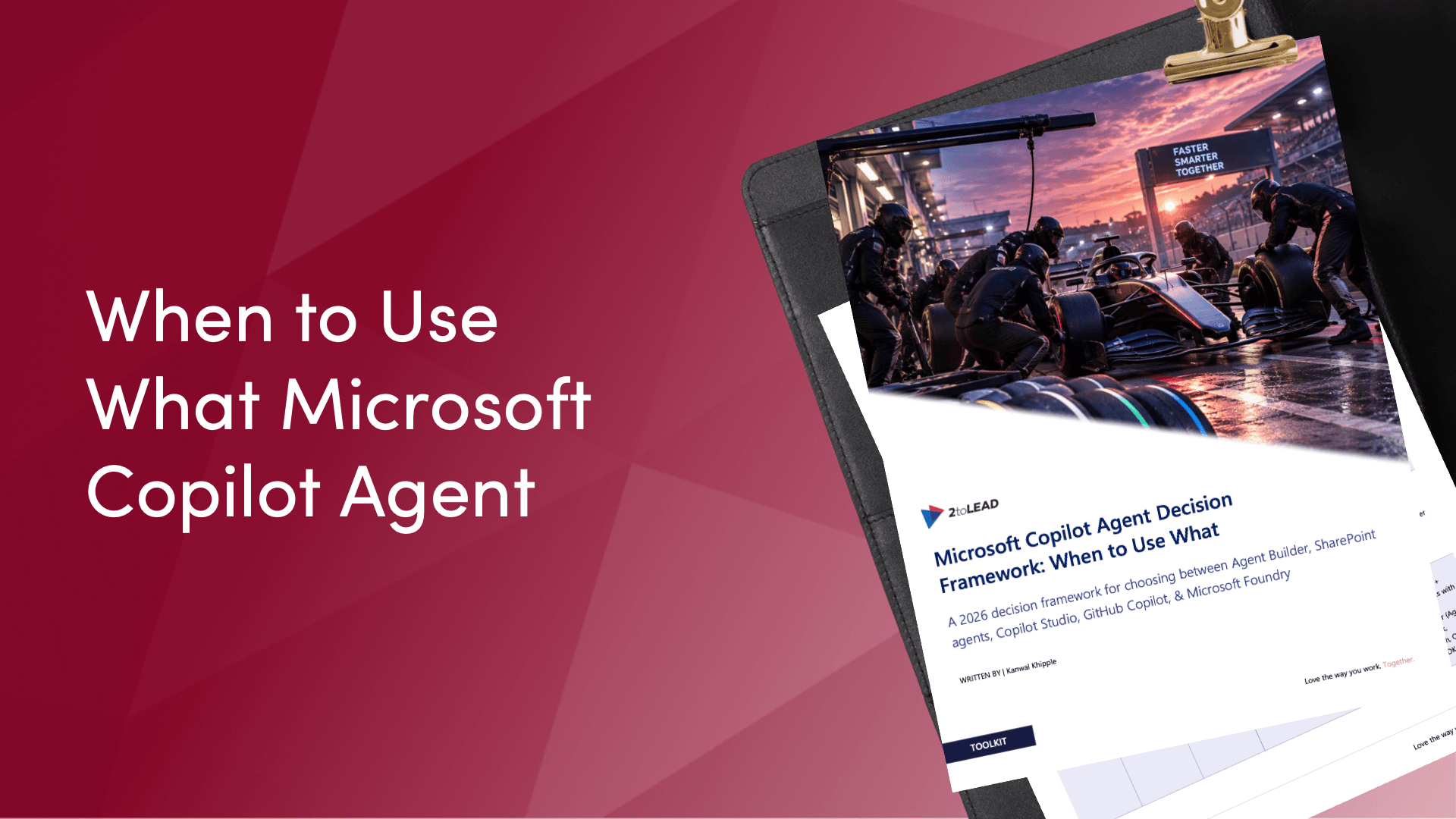
Over the last year, Microsoft changed how agents get built. Copilot Studio now runs on three different harnesses, and each one has its own capabilities and billing. Azure AI Foundry is now Microsoft Foundry. GitHub launched Agent HQ for coding agents.
Choosing "Copilot Studio" now covers only part of the decision. You also have to choose the harness, the identity model and the governance path.
This toolkit gives CIOs, architects and platform owners a practical framework for one of the hardest agent decisions to undo: where each agent should live. It also shows how to plan the agent's next step as its scope grows.
A practical toolkit for matching every candidate agent to the right Microsoft surface:
Building too much in Foundry when Agent Builder would do costs as much as building too little in Agent Builder when you needed Copilot Studio. Both lead to rework, credibility loss and sprawl
This framework helps your team:
This toolkit is for leaders and teams who decide where agents get built and who owns them:
The organizations that get the most from agents won't be the ones that pick a favourite tool. They'll be the ones that match every agent to the right surface and govern it from day one.
Download the toolkit to make platform decisions you can defend in your next architecture review.
What is the Microsoft Copilot Agent Decision Framework?
It's a 2026 toolkit from 2toLead that helps teams decide which Microsoft agent platform each use case belongs on. It covers Agent Builder, SharePoint agents, Copilot Studio, GitHub Copilot and Microsoft Foundry, and it's built for architecture reviews, not product demos.
How is this different from other Copilot Studio vs. Foundry comparisons?
Most comparisons look at three tools and pick a winner. This toolkit maps five agent options, breaks Copilot Studio down further than most guides do, and adds the identity, governance and ALM decisions that usually get missed until after launch.
How do I use the framework with my own agent ideas?
Run each candidate use case through the decision tree, then check the result against the comparison matrix and the platform deep dives. Most teams can sort a backlog of agent ideas in a single working session.
Does the toolkit cover governance and security?
Yes. A full section covers agent identity, ownership and admin surfaces, plus the governance questions every team should answer before it builds anything.
Are there real-world examples?
Yes. Four industry scenarios show the framework applied in manufacturing, healthcare, nonprofit and software development, including when each agent should move to a more capable platform.


Join Our Newsletter
